

 USA
USA
 United Kingdom
 Germany
 Argentina
 Australia
 Canada
 New Zealand
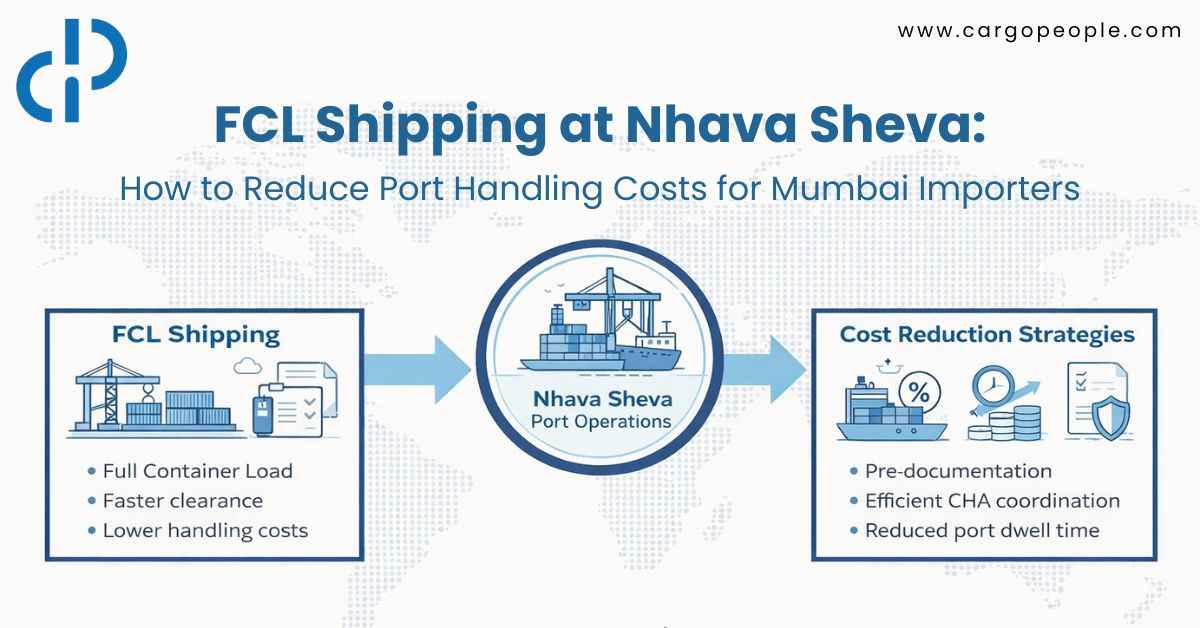
FCL shipping at Nhava Sheva (JNPT) typically takes 3–7 days for complete port handling and clearance, depending on documentation accuracy, customs processing, and terminal congestion.
Mumbai importers can reduce port handling costs by:
-
Filing Bill of Entry before vessel arrival (saves 24–48 hours)
-
Keeping container dwell time under 72 hours
-
Using Direct Port Delivery (DPD) to reduce handling layers
-
Avoiding demurrage of ₹7,000–₹15,000 per container per day
-
Coordinating transport within 12–24 hours after clearance
Even a 2-day delay can increase total logistics cost by 10–18% per shipment.
Real Business Scenario: How Small Delays Turn Into Large Costs
In early 2026, a Mumbai-based importer handling industrial chemicals experienced a 4-day delay at Nhava Sheva, resulting in additional logistics costs of nearly ₹78,000.
Cost impact breakdown:
-
Demurrage: ₹11,000 × 2 days = ₹22,000
-
Detention: ₹9,000 × 2 days = ₹18,000
-
Storage & ground handling: ₹20,000
-
Transport rescheduling: ₹8,000
-
Documentation correction: ₹10,000
The delay was caused by:
-
Bill of Entry filed after vessel arrival
-
Incorrect HS classification triggering inspection
-
Transporter arranged 48 hours late
This is a common operational gap. At JNPT, nearly 35–40% of delays are linked to documentation and coordination inefficiencies, not port congestion alone.
Why FCL Shipping at Nhava Sheva Becomes Expensive for Importers
Nhava Sheva (JNPT) is India’s largest container port:
-
Handles 6.5–7 million TEUs annually
-
Manages over 55% of India’s containerized cargo
-
Operates through terminals like NSICT, GTI, BMCT, NSIGT
Despite infrastructure upgrades, costs increase due to operational inefficiencies.
1. Terminal Handling and Port Charges
Typical cost components:
-
THC (Terminal Handling Charges): ₹9,000–₹18,500 per container
-
Port ground rent: ₹2,000–₹4,500/day after free period
-
Scanning charges: ₹1,000–₹3,000
-
Lift-on/lift-off charges: ₹2,500–₹6,000
For a standard 20FT container, base port cost can reach ₹15,000–₹28,000 before delays.
2. Demurrage: The Biggest Cost Escalation Factor
Demurrage applies when containers stay at port beyond free days.
-
Free period: 2–3 days
-
Post free period:
-
Day 1–3: ₹7,000–₹10,000/day
-
Day 4 onwards: ₹12,000–₹15,000/day
-
A 5-day delay can increase total cost by ₹50,000–₹75,000 per container.
3. Container Detention by Shipping Lines
Once container exits port:
-
Free time: 5–7 days
-
After that: ₹5,000–₹12,000/day
Many importers overlook this, but detention can contribute 20–25% of total avoidable logistics cost.
4. Customs Clearance Delays and Their Financial Impact
-
Normal clearance time: 24–72 hours
-
With inspection: 48–96 hours
-
Delayed cases: up to 5–7 days
Every additional day:
-
Increases storage by ₹2,000–₹5,000
-
Triggers demurrage accumulation
-
Delays inventory availability
For manufacturing units, this can disrupt production cycles by 2–5 days.
FCL Shipping Nhava Sheva – Complete Operational Workflow
Understanding the exact process helps importers control both time and cost.
1. Vessel Arrival and Container Discharge
-
Containers unloaded within 6–12 hours
-
Delays possible during peak congestion (up to 24 hours)
2. Import General Manifest (IGM) Filing
-
Filed by shipping line within 24 hours
-
Errors here can delay clearance by 1–2 days
3. Bill of Entry Filing on ICEGATE
-
Ideal timing: before vessel arrival
-
Late filing adds 24–48 hours delay
4. Duty Assessment and Payment
-
Automated in most cases
-
Takes 4–12 hours
5. Customs Examination (Selective)
-
10–20% containers inspected
-
Time required: 24–48 hours
6. Out of Charge (OOC) Clearance
-
Final approval stage
-
Usually completed within 2–6 hours after assessment
7. Container Pickup and Exit
-
Must be executed within 12–24 hours
-
Delay here directly leads to demurrage
Table 1 — Logistics Process Overview
| Process Stage | Authority | Typical Timeline | Documents Required | Risk if Delayed |
|---|---|---|---|---|
| Vessel Arrival | Port Authority | 6–12 hrs | Bill of Lading | Berthing delay |
| IGM Filing | Shipping Line | <24 hrs | Manifest | Clearance hold |
| Bill of Entry | CHA | 0–24 hrs | Invoice, Packing List | Demurrage starts |
| Duty Assessment | Customs | 4–12 hrs | HS Code | Reassessment |
| Inspection | Customs | 24–48 hrs | Cargo access | Delay penalties |
| Container Exit | Transporter | 12–24 hrs | Delivery Order | Detention cost |
Operational Insight:
If container is not cleared within 72 hours, cost escalation begins rapidly due to overlapping charges.
Table 2 — Documentation Checklist
| Document | Issued By | Required For | Submission Stage | Risk if Missing |
|---|---|---|---|---|
| Bill of Lading | Shipping Line | Ownership proof | Arrival | Cargo hold |
| Commercial Invoice | Exporter | Valuation | BOE filing | Duty increase |
| Packing List | Exporter | Inspection | BOE filing | Physical check delay |
| Bill of Entry | Importer/CHA | Clearance | ICEGATE | No clearance |
| Import License | DGFT | Restricted goods | Pre-clearance | Penalty |
| Delivery Order | Shipping Line | Container release | Post-clearance | Exit delay |
Key Insight:
More than 60% of port delays in India are linked to documentation errors or late submissions.
How Mumbai Importers Can Reduce Port Handling Costs at Nhava Sheva
1. Pre-Arrival Documentation Strategy
-
File Bill of Entry 24–48 hours before arrival
-
Pre-calculate duties
-
Validate HS codes in advance
Result: Reduces clearance time by 30–50%
2. Target Low Container Dwell Time
-
Ideal dwell time: <72 hours
-
Industry average: 3–4 days
-
Best-performing importers: 2–2.5 days
Reducing dwell time by just 1 day can save ₹8,000–₹15,000 per container.
3. Use Direct Port Delivery (DPD) Model
DPD reduces dependency on CFS.
Benefits:
-
Cuts dwell time by 1–2 days
-
Reduces handling cost by 10–20%
-
Faster cargo evacuation
4. Accurate HS Code and Valuation
Incorrect classification leads to:
-
Duty reassessment delays: 24–48 hours
-
Increased inspection probability
Correct classification reduces clearance friction significantly.
5. Advance Transport Planning
-
Pre-book trailers before clearance
-
Ensure pickup within 12 hours of OOC
Delay in truck placement is responsible for 15–25% of post-clearance delays.
6. Work with Experienced CHA and Freight Forwarder
A skilled CHA:
-
Reduces documentation errors by 35–45%
-
Speeds up customs coordination
-
Helps avoid penalties and delays
Logistics Risks & Delay Factors at Nhava Sheva
Common Risks
-
Customs inspection selection (10–20% cargo)
-
Port congestion during peak seasons
-
Delay in duty payment
-
Incorrect invoice declaration
-
Container scanning backlog
-
Transport unavailability
Cost Impact Summary
-
Demurrage: ₹7,000–₹15,000/day
-
Detention: ₹5,000–₹12,000/day
-
Storage: ₹2,000–₹5,000/day
A combined delay of 3–4 days can increase shipment cost by ₹40,000–₹90,000.
Practical Business Example: Cost Optimization in Action
A Mumbai-based engineering importer improved efficiency by:
-
Filing Bill of Entry 48 hours before arrival
-
Using DPD clearance
-
Pre-booking transport
Results:
-
Clearance time reduced from 5 days to 2.5 days
-
Cost savings: ₹42,000 per container
-
Inventory availability improved by 3 days
Decision Guide: When FCL Shipping is the Right Choice
FCL is ideal when:
-
Cargo volume exceeds 15–18 CBM
-
Shipment weight is above 10–12 tons
-
Regular import cycles exist
-
Cost per unit needs optimization
Avoid FCL when:
-
Shipment is below 10 CBM
-
Urgent delivery required (use air freight)
Role of Freight Forwarder in Cost Reduction
Freight forwarders play a critical operational role:
-
Carrier selection and booking optimization
-
Customs clearance coordination
-
Documentation accuracy
-
Real-time shipment tracking
-
Transport and delivery planning
Businesses working with experienced forwarders typically:
-
Reduce delays by 30–40%
-
Improve cost efficiency by 10–18% per shipment
Conclusion
FCL shipping at Nhava Sheva becomes cost-efficient only when time, documentation, and coordination are tightly managed.
Key takeaways:
-
Keep dwell time under 72 hours
-
Avoid demurrage and detention
-
File documents before cargo arrival
-
Ensure accurate HS classification
-
Plan transport in advance
For Mumbai importers, even a 2-day delay can increase logistics cost by 10–25%, making operational efficiency a key competitive advantage.
CTA — Cargo People Logistics
📞 +91 97174 65454
📧 wecare@cargopeople.com
Get a Shipping Quote from Cargo People Logistics