

 USA
USA
 United Kingdom
 Germany
 Argentina
 Australia
 Canada
 New Zealand
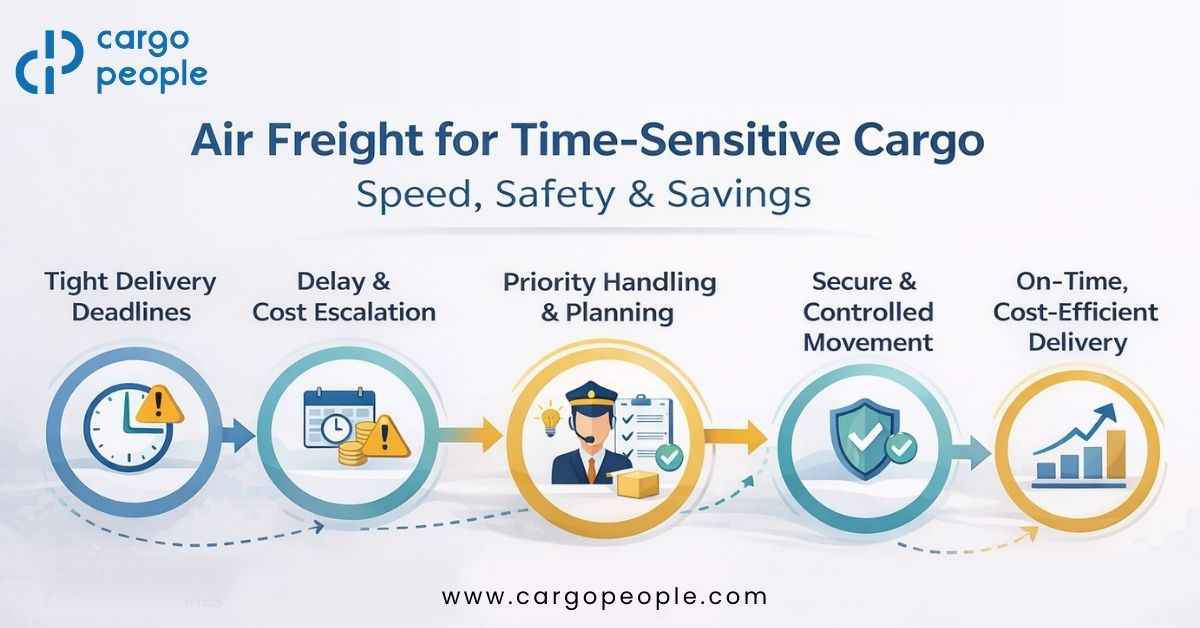
A mid-sized medical equipment exporter from Pune once faced a hard choice. A shipment worth several lakhs was ready, but a minor production delay meant missing the booked sea vessel. Waiting for the next sailing would push delivery by almost three weeks. The overseas buyer had already warned that any delay would trigger penalties.
The exporter shifted the cargo to air freight. The shipment reached in three days. The relationship was saved, penalties were avoided, and the buyer later increased order volumes.
This is the reality many Indian exporters face today. When time becomes critical, logistics decisions stop being about freight rates and start becoming business decisions. Air freight plays a crucial role in such moments.
Why Air Freight Is Critical for Time-Sensitive Cargo
Time-sensitive cargo is not always about emergencies. Often, it is about commitments, contracts, and customer expectations.
In industries like pharmaceuticals, electronics, auto components, and fashion, delivery timelines are tightly linked to production schedules, product launches, or regulatory approvals. A small delay can ripple across the supply chain.
Air freight provides consistency and predictability. Flights operate on fixed schedules, transit times are shorter, and cargo handling is streamlined. For businesses working with global buyers, this reliability reduces uncertainty and allows better planning.
From a business perspective, air freight helps:
-
Maintain delivery promises
-
Reduce stress on production timelines
-
Build long-term buyer confidence
-
Protect brand credibility in international markets
Understanding the True Cost of Delays in Global Trade
Many businesses compare air and sea freight only on per-kg cost. This comparison misses the bigger picture.
Delays often lead to hidden costs such as:
-
Production downtime
-
Emergency inventory purchases
-
Penalty clauses in contracts
-
Loss of repeat orders
For exporters working on thin margins, these indirect costs can quietly exceed the additional air freight expense.
Air freight reduces exposure to these risks. By shortening transit and clearance timelines, businesses can keep operations moving and avoid disruption costs that never appear on a freight invoice but directly impact profitability.
When Air Freight Makes Financial Sense for Indian Businesses
Air freight is not meant for every shipment, but it is extremely effective in specific scenarios.
It makes strong financial sense when:
-
Cargo value is high but volume is low
-
Delivery deadlines are fixed and non-negotiable
-
Goods are sensitive to temperature, damage, or shelf life
-
Buyers operate on just-in-time inventory models
For exporters dealing with international OEMs or large retailers, air freight often becomes the safer and smarter choice even when costs appear higher upfront.
Comparing Air, Sea, and Rail Freight for Time-Sensitive Cargo
Different transport modes serve different business needs. Understanding their impact on speed, risk, and cash flow helps in choosing the right option.
Air freight prioritizes speed and certainty. Sea freight works well for bulk shipments with flexible timelines. Rail freight fits regional or mid-distance routes where time pressure is moderate.
The key takeaway for decision-makers is this: the right freight mode depends on urgency, not just budget.
Air Freight Transit Time from India to Major Global Markets
Speed is one of the strongest advantages of air freight.
For Indian exporters, this means:
-
Faster order completion
-
Quicker invoicing and payment cycles
-
Reduced working capital lock-in
Air routes from major hubs such as Delhi, Mumbai, Bengaluru, and Hyderabad are well connected to global trade corridors. This connectivity allows exporters to reach key markets in a matter of days instead of weeks.
For businesses operating in competitive international markets, these time savings often translate directly into commercial advantage.
Safety, Security, and Cargo Integrity in Air Freight
Air freight is considered one of the safest modes for transporting high-value and sensitive cargo.
Shorter transit times reduce exposure to:
-
Moisture and environmental damage
-
Multiple handling points
-
Theft and pilferage risks
Airports also follow stricter security protocols compared to seaports. Cargo is stored in controlled environments, and movement is monitored closely. For pharmaceuticals, electronics, and luxury goods, this controlled handling significantly reduces the risk of damage or loss.
For exporters, this means fewer insurance claims, lower rejection rates, and smoother customer acceptance.
Customs Clearance and Documentation Advantages in Air Cargo
Customs clearance is often where shipments lose time. Air cargo generally moves faster through customs because:
-
Documentation is standardized and pre-filed
-
Cargo volumes per shipment are smaller
-
Airports are equipped for quicker inspections
Faster clearance helps businesses avoid storage charges and demurrage. It also reduces uncertainty, especially during peak seasons or regulatory changes.
With proper documentation planning, air freight allows exporters to maintain tight delivery schedules without last-minute surprises.
Common Compliance and Operational Risks Businesses Ignore
Many delays happen not because of transport mode, but due to poor planning.
Typical mistakes include:
-
Incomplete or incorrect paperwork
-
Choosing sea freight despite tight deadlines
-
Underestimating customs examination timelines
-
Ignoring destination-specific regulations
In time-sensitive shipments, these mistakes become expensive. Air freight, combined with proactive compliance checks, reduces such risks by creating shorter and more manageable logistics windows.
Real Business Experiences from Indian Exporters
An electronics component supplier in Noida once faced repeated production stoppages at a European client’s facility due to delayed sea shipments. By shifting critical components to air freight, the exporter stabilized supply and secured a long-term contract.
Similarly, a fashion exporter from Jaipur used air freight selectively for seasonal collections. This approach allowed them to meet retail launch dates without moving all shipments by air, balancing cost and speed effectively.
These experiences show that air freight works best when used strategically, not emotionally.
How Cargo People Helps Businesses Use Air Freight Smartly
At Cargo People, the focus is not just on booking air cargo but on understanding the business urgency behind it.
Our team works with clients to:
-
Identify which shipments truly require air freight
-
Select the most efficient airline and routing options
-
Optimize costs through consolidation and planning
-
Ensure documentation and compliance readiness
This consultative approach allows businesses to move fast without unnecessary expense or risk.
Final Thoughts: Speed Protects Business Relationships
In international trade, buyers remember reliability more than freight costs. Meeting deadlines builds trust, and trust builds repeat business.
Air freight gives Indian exporters the ability to protect relationships, maintain credibility, and stay competitive in demanding global markets. When used thoughtfully, it becomes a business enabler rather than a cost burden.
Talk to a Logistics Expert at Cargo People
📞 +91 9717465454
📧 wecare@cargopeople.com