

 USA
USA
 United Kingdom
 Germany
 Argentina
 Australia
 Canada
 New Zealand
Suresh owns a fast-growing engineering goods company in Rajkot. His export orders to the Middle East were increasing, but so were complaints from buyers—late arrivals, inconsistent delivery timelines, and occasional cargo handling issues. On paper, his logistics costs looked under control. In reality, delays were quietly eating into his margins and reputation.
The turning point came when one delayed shipment caused a long-term buyer to renegotiate payment terms. That’s when Suresh realized that choosing the right shipping model matters as much as negotiating the freight rate.
This is where understanding FCL (Full Container Load) shipping becomes critical.
What Is FCL (Full Container Load) Shipping?
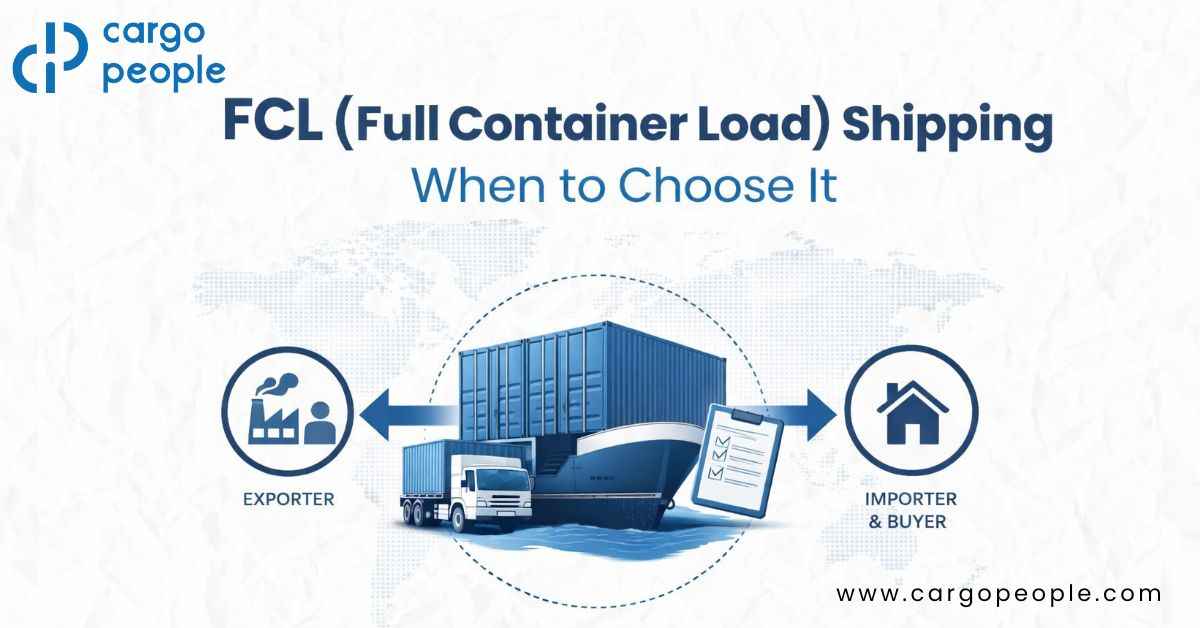
FCL shipping means booking an entire container exclusively for your cargo, regardless of whether it is fully packed or partially filled.
For Indian importers and exporters, FCL is not just a logistics option—it’s a control mechanism.
When you choose FCL:
-
Your cargo is packed, sealed, and shipped without mixing with other consignments
-
Documentation remains straightforward and shipment-specific
-
Responsibility and accountability stay clearly defined
For businesses shipping consistently from India to markets like the USA, Europe, China, or the Middle East, FCL offers stability that shared shipments often fail to provide.
When Does FCL Make Business Sense?
Many exporters assume FCL is only for very large volumes. In reality, the decision depends on risk, urgency, and predictability, not just cubic meters.
FCL is usually the right choice when:
-
Your shipment volume crosses 12–15 CBM
-
You export regularly on the same trade lanes
-
Delivery deadlines are linked to contracts or penalties
-
Your cargo value is high or sensitive
-
You want to reduce dependency on third-party shippers
For manufacturers and traders operating on tight production and delivery schedules, FCL reduces uncertainty and allows better planning across procurement, warehousing, and distribution.
FCL vs LCL: Looking Beyond Freight Cost
At first glance, LCL appears cheaper. But experienced exporters know that freight cost is only one part of the logistics equation.
| Aspect | FCL Shipping | LCL Shipping |
|---|---|---|
| Cargo Control | Full control | Shared control |
| Risk Exposure | Lower | Higher |
| Clearance Process | Single shipment | Multiple parties |
| Transit Reliability | High | Variable |
| Hidden Costs | Limited | Common |
What this means in practice:
FCL often reduces indirect costs such as storage charges, coordination delays, inspection hold-ups, and last-minute corrections—costs that rarely appear in freight quotes but directly affect profitability.
Why FCL Works Better at Major Indian Ports
Indian ports handle massive container volumes every day, but congestion, peak seasons, and documentation checks can slow things down.
| Port | Key Export Strengths | Why FCL Performs Better |
|---|---|---|
| Mundra | Engineering goods, chemicals | Faster evacuation, strong vessel connectivity |
| Nhava Sheva (JNPT) | FMCG, auto parts, textiles | Higher priority for sealed FCL containers |
| Chennai | Automotive, electronics | Stable East Asia routes |
| Kolkata | Machinery, agri exports | Strategic Southeast Asia access |
Business insight:
FCL containers move faster at busy ports because they involve fewer parties, fewer checks, and clearer documentation trails.
Cost Efficiency: The Long-Term View of FCL
FCL may seem expensive upfront, but many exporters save money over time by avoiding hidden operational losses.
With FCL, businesses often reduce:
-
Container freight station handling charges
-
Demurrage and detention risks
-
Cargo damage claims
-
Insurance premiums linked to mixed cargo
-
Administrative follow-ups with multiple stakeholders
A packaging materials exporter from Gujarat found that switching to FCL improved delivery predictability so much that buyers were willing to place larger, more frequent orders—offsetting freight costs through higher volumes.
Customs Clearance: Why FCL Moves Faster
Customs clearance is one of the most critical phases of international shipping. FCL shipments benefit because:
-
Documentation belongs to a single shipper
-
Risk profiling is simpler
-
Physical examination is easier to manage
-
Coordination between CHA, shipping line, and customs is streamlined
For exporters shipping from India during peak seasons or regulatory changes, FCL significantly reduces the chances of being delayed due to another shipper’s non-compliance.
Operational Risk: What Happens When Planning Goes Wrong
A home furnishing exporter in Panipat chose LCL to save cost during peak season. Another shipper’s incorrect declaration in the same container triggered a full inspection.
The result:
-
Container held at port
-
Unexpected demurrage charges
-
Missed buyer delivery timeline
-
Emergency production rescheduling
This wasn’t a freight issue—it was a planning issue. Proper FCL planning would have avoided third-party exposure entirely.
Mini Business Story: How FCL Improved Buyer Confidence
A pharmaceutical exporter from Hyderabad shipping temperature-sensitive products to Europe faced repeated buyer audits. By switching to FCL with sealed containers and controlled handling, the exporter achieved:
-
Zero cargo damage incidents
-
Faster clearance at destination
-
Stronger buyer trust and contract renewals
In many industries, FCL is not just about logistics—it’s about brand reliability.
Conclusion: Is FCL the Right Choice for Your Business?
FCL shipping is ideal when:
-
Consistency matters more than one-time savings
-
Delivery timelines impact buyer relationships
-
Cargo value, compliance, and control are priorities
-
You want predictable logistics costs and outcomes
Ignoring freight strategy often leads to penalties, delays, and strained partnerships. Choosing FCL at the right stage supports sustainable growth and operational confidence.
Cargo People helps Indian importers and exporters choose the most efficient shipping model—balancing cost, speed, and compliance across global trade routes.
📞 Speak to a Freight Consultant
📞 +91 9717465454
📧 wecare@cargopeople.com
Book a Consultation with Cargo People Logistics