

 USA
USA
 United Kingdom
 Germany
 Argentina
 Australia
 Canada
 New Zealand
Rohit Sharma, the founder of BlueLeaf Exports, a textile manufacturer from Tirupur, finally secured a major order from a US retailer. Everything was going smoothly — until his container sat an extra two days at Nhava Sheva because of a late shipping bill. The result? A ₹1.2 lakh hit in detention and storage fees.
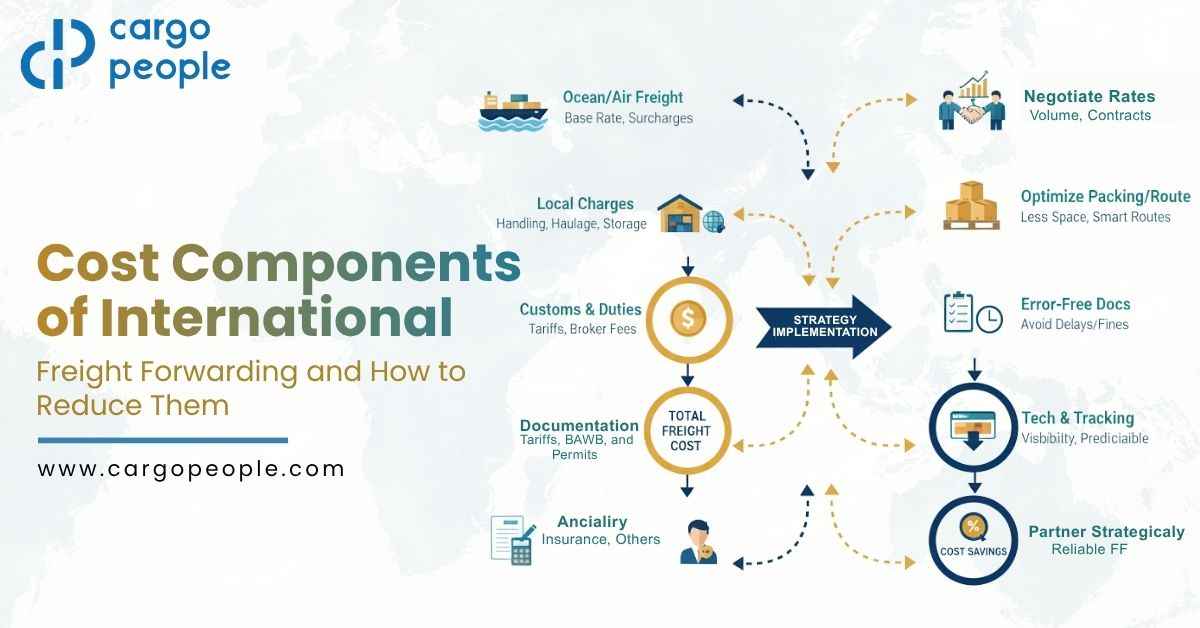
Stories like Rohit’s are not unusual. In India’s export ecosystem, freight cost is more than just a shipping rate. It’s a complex combination of carrier fees, port charges, customs processing, and inland logistics. Understanding how each cost component works is the key to saving lakhs every year.
What Actually Makes Up Your Freight Cost
When you receive a freight quote from your forwarder, it might look like a single figure. In reality, it’s built from multiple layers that add up as your shipment moves through India’s export chain.
1. Base Freight
This is the core transportation charge — ocean or air freight — usually influenced by:
-
Route popularity (India–US, India–EU, or India–Middle East)
-
Type of goods (hazardous, temperature-sensitive, high-value)
-
Container type and size (20’, 40’, Reefer, or OOG)
-
Global market conditions (fuel price, demand, and seasonal surcharges)
2. Port and Terminal Charges
Ports like Mundra and JNPA (Nhava Sheva) apply standard handling fees, wharfage, and ground rent. Storage rates rise sharply once the free period ends, which is why exporters must plan gate-in and documentation timing carefully.
3. Carrier and Line Fees
Shipping lines often apply separate BL (Bill of Lading) fees, Equipment Handling Charges, and Detention & Demurrage (D&D) penalties if containers are held too long. Negotiating extra free days or managing faster customs clearance can prevent these costs from escalating.
4. CFS / ICD Costs
For LCL shipments or exporters using inland depots, Container Freight Stations (CFS) charge for carting, handling, scanning, and storage. While essential, poor scheduling or missing cut-offs can quickly add thousands to your bill.
5. Customs and Compliance
Documentation errors or missing licenses often delay LEO (Let Export Order) clearance. This not only holds cargo but also triggers daily rent or demurrage. Choosing an experienced CHA or freight forwarder helps mitigate these risks.
6. Inland Logistics
The “invisible” cost — first and last-mile transport. Trucking, rail haulage, tolls, and fuel surcharges all contribute to the landed cost. Streamlining your supply chain route planning can reduce internal logistics costs by 10–15%.
India’s Major Ports and Why They Affect Freight Costs
Choosing the right port isn’t just about proximity; it’s about connectivity, reliability, and handling speed. Here’s a snapshot of how India’s key ports stack up.
| Port | FY 2023–24 Throughput (TEUs) | What It Means for Exporters |
|---|---|---|
| Mundra (Gujarat) | ~7.4 million | Highest capacity; frequent mainline sailings; slightly higher local tariff structure. |
| JNPA/Nhava Sheva (Maharashtra) | ~6.4 million | Strong ecosystem with multiple CFS options; ground rent sensitivity during peak weeks. |
| Cochin (Kerala) | ~0.75 million | Ideal for southern exporters; smaller port congestion, moderate tariffs. |
Key takeaway:
A port with faster turnaround and predictable sailings can offset slightly higher local tariffs through reduced storage and fewer missed connections.
How Time Impacts Cost — The Value of Faster Clearance
In freight, time lost is money burned. India’s average sea export clearance time is roughly 22 hours, but smaller inefficiencies — a missing invoice, a late EDI submission, or an unverified HS code — can turn one day into three.
Why clearance delays matter:
-
Ports and CFSs charge rent per day per container once the free window expires.
-
Missed sailings often lead to new surcharges like Peak Season or Congestion Fees.
-
Buyers overseas may claim penalties for delayed delivery under supply contracts.
Practical tips to save time:
-
File your shipping bill and SI at least a day before the cut-off.
-
Keep a shared folder with all documents pre-validated by your CHA.
-
Track cut-off times in real time; many terminals now update via APIs or WhatsApp alerts.
Hidden Freight Charges You Should Never Ignore
Even after receiving a “final quote,” several charges can creep in later.
| Hidden Cost | When It Appears | How to Control It |
|---|---|---|
| D&D (Detention & Demurrage) | When containers or cargo stay beyond free time | Negotiate extra free days or pre-clear cargo before the weekend |
| Documentation or Amendment Fees | When BL/SI needs correction | Double-check HS codes and consignee details early |
| Terminal Handling Charges (THC) | Port handling during loading/unloading | Verify if THC is included or billed separately |
| Fuel Adjustment Factor (FAF) or BAF | When oil prices fluctuate | Consider fixed-rate contracts for high-volume routes |
| Peak Season or Congestion Surcharge | When ports are overcrowded | Ship during off-peak seasons or use alternate ports |
How to Reduce Freight Costs Without Compromising Quality
Saving on freight isn’t about squeezing your logistics provider — it’s about smarter planning and visibility.
1. Consolidate Shipments
Combining smaller consignments into FCL loads reduces per-unit costs, avoids CFS congestion, and improves shipment control.
2. Forecast and Book Early
Advance booking gives you access to lower contract rates and better vessel allocation. Last-minute bookings often attract 15–20% premiums.
3. Negotiate on D&D and Storage Terms
Always include free-day clauses in your freight contract. A small buffer (even two days) can save huge costs in peak seasons.
4. Explore Alternate Gateways
Ports like Cochin and Hazira are becoming reliable alternatives to overburdened JNPA during congestion months.
5. Digitize Documentation
Switching to digital BLs and real-time EDI submissions reduces manual errors and accelerates customs approval.
When Compliance Delays Become Expensive — A Real Case
A machinery exporter at JNPA missed the cut-off for updating their Shipping Bill due to a minor HS code error. The container stayed over the weekend, and the ship sailed without it.
-
Extra Cost: ₹1.5 lakh (storage + roll-over surcharge).
-
Lesson Learned: Having a daily checklist for SI, HS codes, and license details can prevent both financial and reputation loss.
Simple proactive communication with your CHA or freight forwarder can prevent such incidents 9 times out of 10.
When to Choose Sea vs Air Freight
| Mode | Best For | Typical Transit | Cost Range (vs base sea = 1x) | Key Tips |
|---|---|---|---|---|
| Sea Freight (FCL/LCL) | Bulk goods, machinery, garments | 20–40 days | 1x | Use long-term contracts to manage seasonal volatility |
| Air Freight | Pharma, electronics, perishable or urgent goods | 3–7 days | 5–7x | Use deferred air or consol services for cost savings |
Decision framework:
If your product’s shelf life or client deadline allows flexibility, sea remains the most cost-effective mode. For time-critical goods, look for hybrid models — e.g., sea-air transshipment via Dubai or Singapore.
Mini Success Stories — Real Business Wins
1. BlueLeaf Exports (Tirupur)
Switched from LCL to a dedicated weekly FCL consolidation model with partners in Mumbai. Reduced freight costs by 18% and eliminated two days of CFS rent each month.
2. AeroCare Devices (Pune)
Moved 30% of exports to deferred airfreight options through Mumbai ACC. Shorter customs clearance times improved delivery performance while saving ~10% on per-kg freight rates.
How to Keep Freight Costs Under Control All Year
-
Track cut-off and sailing schedules weekly.
-
Maintain buffer days in documentation during public holidays or port closures.
-
Review carrier performance every quarter — on-time departures reduce downstream storage risks.
-
Use your freight forwarder as a partner, not just a vendor; share forecasts so they can secure better rates.
-
Evaluate multimodal combinations (rail + sea) for North India exporters to cut road costs.
FAQs
Q1. What documents are mandatory for sea exports from India?
Commercial invoice, packing list, shipping bill, e-way bill (if applicable), BL/SI, and certificates of origin or compliance depending on HS code.
Q2. How do freight forwarders help during customs clearance?
They coordinate with CHAs, manage query resolution, and ensure timely carting to prevent storage penalties.
Q3. What’s the best way to avoid demurrage?
Submit documents early, track free-day expiry, and plan vessel schedules with your line or forwarder in advance.
Q4. How can small exporters reduce logistics costs?
Join consolidation programs, use digital freight platforms, and negotiate shared trucking for first-mile moves.
Q5. Is it worth paying for extra free days?
Absolutely. Buying even two additional days upfront is far cheaper than paying detention penalties later.
Conclusion — Control the Costs You Can
Freight costs may feel uncontrollable, but most overruns stem from avoidable inefficiencies: late documents, missed cut-offs, or lack of planning.
By understanding each cost layer — and working with the right logistics partner — you can save 10–25% on international freight within a single shipping cycle.
At Cargo People Logistics, we help Indian exporters structure freight, documentation, and customs processes to minimize hidden charges and downtime.
Ready to take control of your logistics?
📞 +91 78350 06245 | 📧 Cha@cargopeople.com
Book a Consultation with Cargo People Logistics