

 USA
USA
 United Kingdom
 Germany
 Argentina
 Australia
 Canada
 New Zealand
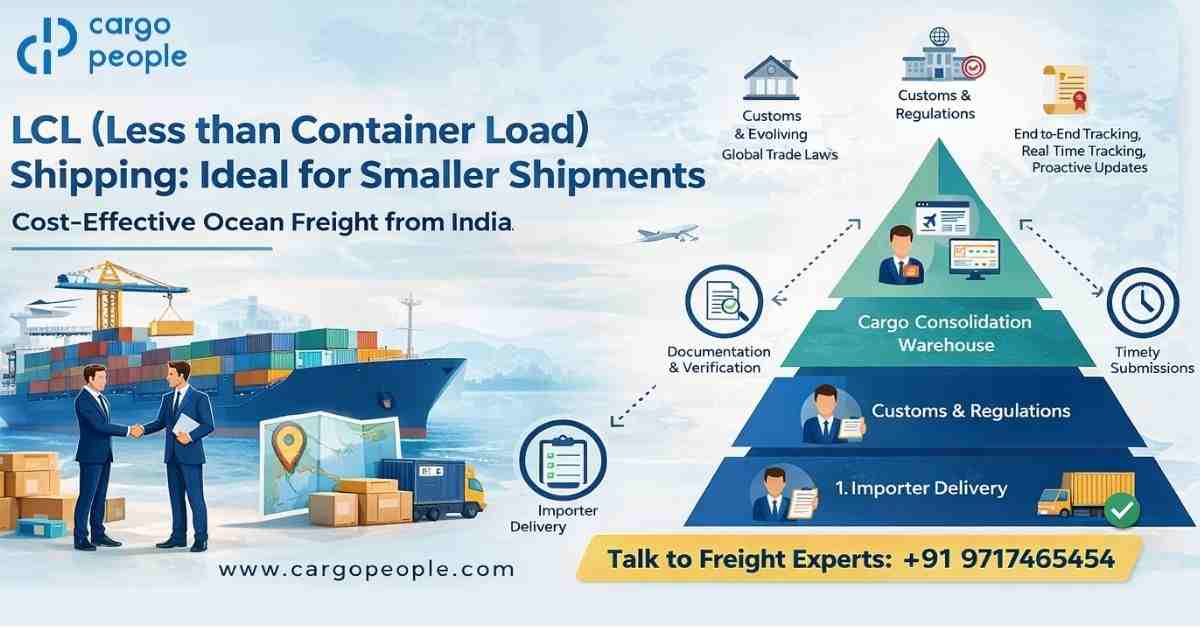
When a Jaipur-based handicrafts exporter received a last-minute order from a European buyer, the volume was too small to justify a full container but too urgent to wait for bulk consolidation. Air freight was eating into margins, and delaying shipment meant risking the relationship. The solution wasn’t faster transport — it was smarter freight planning. That’s where LCL shipping quietly solved the problem.
For thousands of Indian SMEs, LCL (Less than Container Load) shipping has become the most practical way to move smaller consignments without overpaying or overcommitting capacity.
What Is LCL Shipping?
LCL, or Less than Container Load shipping, allows multiple exporters’ cargo to share space inside a single container. Instead of paying for the entire container, businesses pay only for the space their cargo occupies, usually calculated per CBM (cubic meter).
For Indian importers and exporters shipping smaller volumes, LCL provides flexibility without compromising global reach.
Key points to understand:
-
Ideal for shipments that do not fill a full 20ft or 40ft container
-
Cost is calculated based on volume or weight, whichever is higher
-
Commonly used by SMEs, first-time exporters, and seasonal shippers
-
Widely available from Indian ports like Mundra, Nhava Sheva, Chennai, and Kolkata
How LCL Shipping Works: Step-by-Step
Understanding the LCL process helps businesses reduce delays, avoid demurrage, and plan inventory better.
Here’s how an LCL shipment typically moves from India:
-
Cargo is booked with a freight forwarder and delivered to a consolidation warehouse
-
Multiple exporters’ goods are consolidated into one container
-
Customs clearance is completed at the port of origin
-
Container is shipped to the destination port
-
Cargo is deconsolidated and delivered to the consignee
This shared-container model makes global trade accessible even for low-volume shipments.
Why LCL Shipping Makes Sense for Indian Businesses
For many Indian exporters, logistics costs directly affect pricing competitiveness. LCL shipping helps balance cost control with delivery reliability.
Business advantages of LCL shipping include:
-
Lower upfront freight costs compared to FCL
-
Ability to ship smaller, more frequent consignments
-
Reduced inventory holding and storage expenses
-
Easier cash flow management for SMEs
-
Access to international markets without scale pressure
An apparel exporter in Tirupur reduced inventory backlog by switching from quarterly FCL shipments to monthly LCL dispatches, improving both cash flow and buyer satisfaction.
LCL vs FCL: Choosing the Right Option
Choosing between LCL and FCL depends on shipment volume, urgency, and cost sensitivity.
| Factor | LCL Shipping | FCL Shipping |
|---|---|---|
| Ideal volume | Small to medium shipments | Large shipments |
| Cost structure | Pay per CBM | Fixed container cost |
| Transit time | Slightly longer | Faster |
| Flexibility | High | Lower |
| Risk handling | Shared container | Exclusive container |
What this means for Indian exporters:
If your cargo volume is inconsistent or below container capacity, LCL offers better cost efficiency. FCL makes sense only when shipment volume is predictable and sufficient.
LCL Shipping Costs & Indian Port Dynamics
Freight rates for LCL depend on trade lane demand, port congestion, and consolidation frequency.
Top Indian Ports by Container Volume
| Port | 2023 (TEUs) | 2024 (TEUs) |
|---|---|---|
| Nhava Sheva | 6.2 million | 6.7 million |
| Mundra | 6.4 million | 7.1 million |
| Chennai | 2.0 million | 2.2 million |
| Kolkata | 0.9 million | 1.0 million |
Interpretation:
Higher container volumes at Mundra and Nhava Sheva translate into more frequent LCL sailings and better consolidation options for exporters.
Average Customs Clearance Timeline at Indian Ports
| Port | Normal Clearance | With Examination |
|---|---|---|
| Mundra | 2–3 days | 5–7 days |
| Nhava Sheva | 2–4 days | 6–8 days |
| Chennai | 3–5 days | 7–10 days |
Interpretation:
Accurate documentation and proactive coordination with customs brokers significantly reduce delays, especially for LCL cargo where multiple shipments are linked.
Operational Risks in LCL Shipping — And How to Avoid Them
LCL shipments involve more handling, which increases the importance of compliance and planning.
A Delhi-based electronics importer once faced a week-long delay because one shipper in the shared container submitted incorrect HS codes. The entire container was held for inspection, increasing demurrage costs for all parties.
Common risks include:
-
Incorrect or incomplete documentation
-
Misdeclaration by co-loaders
-
Poor packaging leading to cargo damage
-
Delays during consolidation or deconsolidation
How proactive logistics planning helps:
-
Pre-verification of documents
-
Choosing reliable consolidation partners
-
Proper cargo labeling and packaging
-
Working with experienced freight forwarders
Mini Business Stories: LCL in Action
-
A Mumbai-based machinery spare parts exporter saved nearly ₹2.5 lakh annually by switching from air freight to LCL for urgent but lightweight consignments.
-
A Gujarat-based chemical trader avoided container detention by pre-booking LCL slots during peak season instead of waiting for FCL availability.
-
A Bengaluru startup exporting consumer goods improved delivery reliability by scheduling weekly LCL shipments instead of monthly bulk dispatches.
These decisions didn’t change the product — they remember changed the logistics strategy.
Conclusion: Why LCL Is a Strategic Advantage
LCL shipping is not just a cost-saving option — it’s a strategic tool for flexibility, market responsiveness, and controlled growth.
Key takeaways:
-
Ideal for smaller or irregular shipments
-
Reduces freight and inventory costs
-
Supports faster market entry and scalability
-
Requires careful documentation and expert handling
Ignoring freight planning often leads to avoidable delays, penalties, and lost business. The right logistics partner makes all the difference.
Consult with Cargo People Logistics
📞 +91 9717465454
📧 wecare@cargopeople.com