

 USA
USA
 United Kingdom
 Germany
 Argentina
 Australia
 Canada
 New Zealand
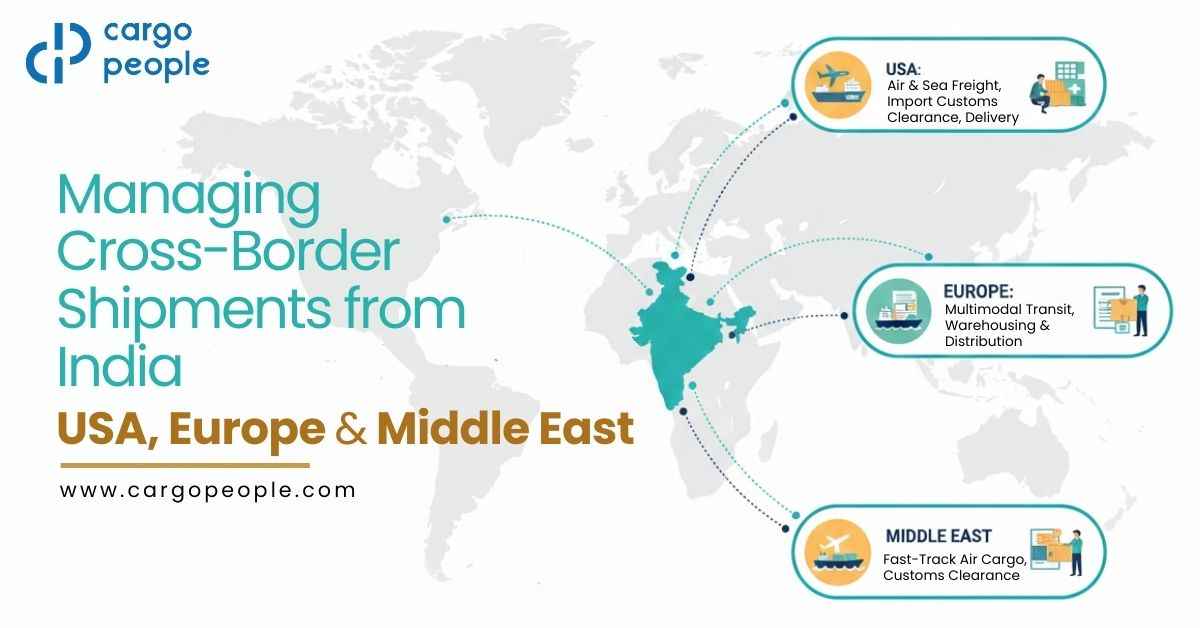
Managing cross-border shipments from India requires more than booking cargo space. Exporters shipping to the USA, Europe, and the Middle East must align freight planning, customs compliance, cost control, and delivery timelines. A structured logistics approach helps businesses avoid delays, reduce costs, and maintain buyer confidence in competitive global markets.
This guide explains how Indian exporters can manage international shipments efficiently while minimizing operational and compliance risks.
Understanding Cross-Border Shipping from India
Cross-border shipping refers to the end-to-end movement of goods from India to international markets, including export documentation, customs clearance, international transportation, and last-mile coordination at destination.
For Indian exporters, the complexity increases due to varying regulations across the USA, Europe, and Middle East. Each region follows different customs procedures, documentation standards, and inspection protocols. Without proper planning, exporters often face shipment delays, demurrage charges, or clearance issues.
Key aspects exporters must manage include:
-
Accurate export documentation and declarations
-
Selection of suitable shipping routes and ports
-
Compliance with destination country regulations
-
Coordination between multiple logistics stakeholders
A proactive logistics strategy helps businesses maintain predictable transit times and cost control.
Selecting the Right Shipping Mode for Global Exports
Choosing the correct shipping mode directly impacts delivery timelines, freight costs, and cargo safety. Exporters should align the shipping method with cargo type, urgency, and market requirements.
Air Freight for Time-Sensitive Shipments
Air freight is ideal for high-value, perishable, or urgent goods. While it offers faster transit times, air freight requires strict documentation accuracy and careful cost planning. Exporters using air cargo must ensure compliance to avoid delays that negate speed advantages.
Sea Freight for Cost-Effective Bulk Movement
Sea freight remains the most widely used option for cross-border shipping from India. Exporters can choose between FCL for larger volumes and LCL for smaller consignments. Sea freight allows better cost optimization but requires advance planning to manage longer transit times.
Multimodal and Rail-Based Solutions
For Europe-bound shipments, multimodal logistics combining rail and sea are increasingly preferred. These options help balance cost, speed, and sustainability, especially for manufacturers shipping consistent volumes.
Selecting the right mode helps exporters reduce freight expenses while meeting buyer delivery expectations.
Freight Cost and Transit Time Considerations
Freight costs fluctuate based on demand, fuel prices, seasonal congestion, and trade lane capacity. Exporters must evaluate both cost and transit time before finalizing shipment plans.
| Mode | Cost Impact | Transit Time | Ideal For |
|---|---|---|---|
| Air Freight | High | 3–7 days | Urgent, high-value cargo |
| Sea Freight | Low | 20–45 days | Bulk and non-urgent goods |
| Multimodal | Medium | 15–25 days | Europe-focused exports |
Business insight:
Exporters often reduce logistics costs by segmenting shipments—using air freight for urgent SKUs and sea freight for planned inventory replenishment.
Choosing the Right Indian Port for Export Shipments
Port selection plays a crucial role in shipment reliability and cost efficiency. Different Indian ports offer varying advantages depending on cargo type, destination, and inland connectivity.
| Port | Advantage | Common Trade Lanes |
|---|---|---|
| Mundra | High capacity, faster evacuation | USA, Europe |
| Nhava Sheva (JNPT) | Strong container connectivity | Global |
| Chennai | Efficient southern access | Europe, Middle East |
| Kolkata | Eastern corridor reach | Southeast Asia |
Using the right port helps exporters reduce congestion delays, lower inland transportation costs, and improve shipment predictability.
Customs Clearance and Export Documentation Management
Customs clearance is one of the most sensitive stages in export logistics from India. Even minor documentation errors can trigger inspections, shipment holds, or penalties.
Key documents exporters must manage include:
-
Commercial Invoice and Packing List
-
Shipping Bill
-
HS Code classification
-
Certificate of Origin
-
Product-specific licenses or declarations
Poor documentation planning often results in demurrage, storage charges, and missed delivery deadlines. Exporters benefit significantly from pre-shipment compliance checks and expert customs coordination.
Managing Compliance Risks in International Trade
Non-compliance is one of the biggest risks in cross-border shipping. Regulatory requirements vary across markets and are frequently updated.
Common compliance challenges include:
-
Incorrect cargo valuation
-
Misclassification of HS codes
-
Missing export licenses
-
Incomplete destination-country paperwork
A structured compliance process helps exporters avoid shipment detention, penalties, and reputational damage with overseas buyers.
Role of Freight Forwarders in Cross-Border Shipping
A professional freight forwarder simplifies international shipping by managing coordination across carriers, customs authorities, and overseas partners.
Freight forwarders help exporters by:
-
Planning optimal shipping routes and schedules
-
Managing customs clearance and documentation
-
Negotiating competitive freight rates
-
Providing shipment visibility and tracking
-
Reducing detention and demurrage risks
This support allows exporters to focus on core business activities while ensuring smooth cargo movement.
Practical Business Example: Cost and Risk Optimization
An Indian engineering goods exporter shipping regularly to the Middle East faced high freight costs and unpredictable transit times. By restructuring shipment schedules and switching to planned sea freight with proper documentation audits, the exporter reduced logistics costs and improved delivery reliability.
Small strategic changes in logistics planning often lead to significant long-term savings.
Conclusion: Turning Logistics into a Business Advantage
Cross-border shipping from India to the USA, Europe, and the Middle East requires careful coordination, compliance awareness, and freight planning. Businesses that treat logistics as a strategic function gain better cost control, faster deliveries, and stronger buyer relationships.
Ignoring these aspects can result in delays, penalties, and lost opportunities in global markets.
Work with Cargo People Logistics
Cargo People Logistics & Shipping Pvt. Ltd. helps Indian exporters manage international shipments with accuracy, compliance, and cost efficiency.
📞 +91 78350 06245
📧 Cha@cargopeople.com
👉 Book a Consultation with Cargo People Logistics