

 USA
USA
 United Kingdom
 Germany
 Argentina
 Australia
 Canada
 New Zealand
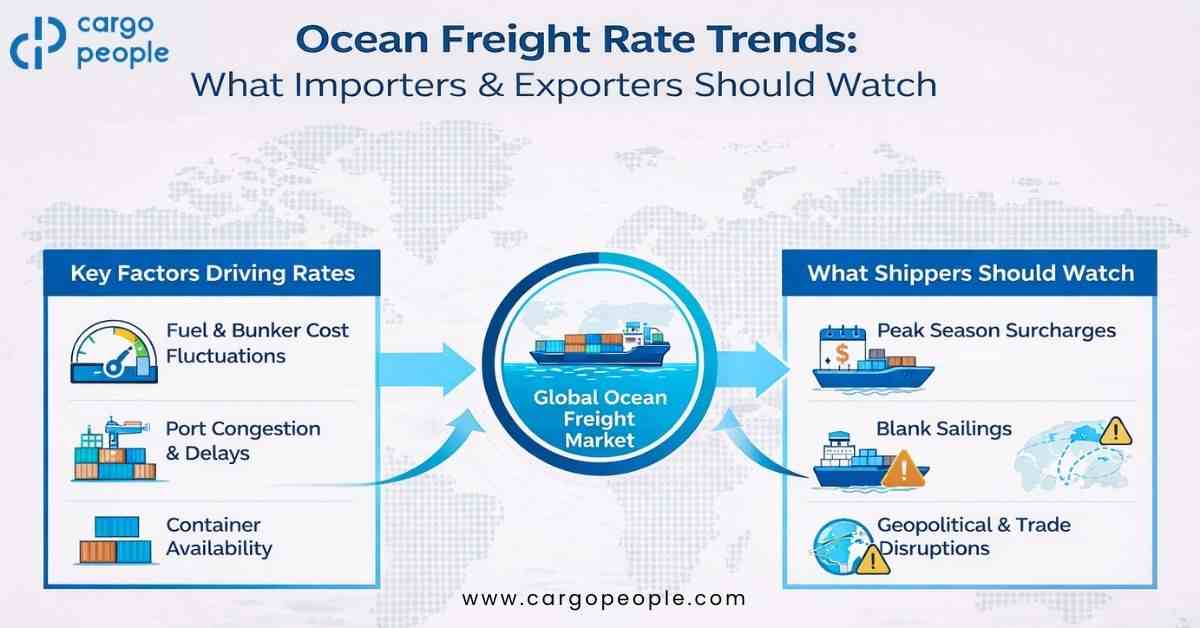
In early 2024, a Mumbai-based auto components exporter finalized a long-term supply contract with a US buyer. The pricing was competitive, margins were tight, and delivery timelines were fixed. But within weeks, ocean freight rates on the India–US East Coast lane spiked unexpectedly. What looked like a profitable deal on paper started eating into margins — not because of production costs, but due to freight volatility.
This is the reality many Indian importers and exporters face today. Ocean freight rates no longer move slowly or predictably. Understanding why rates fluctuate and how to plan around them has become essential for sustainable international trade.
Why Ocean Freight Rates Matter More Than Ever for Indian Trade
Ocean freight is the backbone of India’s international trade, handling over 70% of export-import volumes by value. Even a small rate change can significantly affect landed cost, working capital, and customer commitments.
For Indian businesses, freight rate trends directly impact:
-
Export profitability and pricing strategy
-
Import cost forecasting
-
Contract negotiations with overseas buyers
-
Inventory and cash-flow planning
Ignoring freight trends often leads to reactive decisions instead of planned logistics strategies.
Key Factors Driving Ocean Freight Rate Fluctuations
Ocean freight rates are influenced by a combination of global and India-specific factors. Understanding these drivers helps businesses anticipate changes rather than react to surprises.
Global Demand–Supply Imbalance
-
Sudden demand surges in the US or Europe increase vessel utilization.
-
Blank sailings or capacity withdrawals tighten space availability.
-
Rate volatility increases during peak seasons like Q3 and pre-festive periods.
Fuel Costs and Environmental Regulations
-
Bunker fuel price fluctuations directly impact carrier surcharges.
-
IMO regulations push shipping lines to adopt cleaner fuels, increasing operating costs.
Geopolitical and Trade Route Disruptions
-
Red Sea diversions, port strikes, or canal congestion extend transit times.
-
Longer routes mean higher costs passed on to shippers.
Indian Port Congestion and Dwell Time
-
Delays at Nhava Sheva or Mundra increase container turnaround time.
-
Congestion indirectly tightens capacity and raises freight rates.
Ocean Freight Rate Trends: Global vs India Perspective
While global indices provide a broad view, Indian exporters must interpret them through a local lens.
Global Freight Rate Snapshot
| Indicator | Trend |
|---|---|
| Asia–US Rates | High volatility due to demand swings |
| Asia–Europe Rates | Sensitive to geopolitical disruptions |
| Global Container Capacity | Gradual increase, uneven distribution |
What this means: Even if global rates soften, Indian trade lanes may not follow immediately due to port efficiency and equipment availability.
India-Specific Ocean Freight Dynamics
India’s freight rate behavior is shaped by port infrastructure, trade corridors, and regulatory timelines.
Major Trade Lanes to Watch
-
India–USA: Electronics, auto components, textiles
-
India–Europe: Engineering goods, chemicals, pharma
-
India–Middle East: FMCG, construction materials
Port-Level Impact
-
Mundra often offers faster evacuation but can face equipment shortages.
-
Nhava Sheva handles volume efficiently but is sensitive to customs clearance delays.
Top Indian Ports by Container Volume
| Port | Approx. TEUs (Latest Year) |
|---|---|
| JNPT (Nhava Sheva) | 6+ million |
| Mundra | 7+ million |
| Chennai | 5+ million |
| Kolkata | 0.8+ million |
Interpretation: High-volume ports attract better vessel connectivity but also face congestion risks during peak periods. Planning port selection matters.
FCL vs LCL: How Freight Trends Influence the Choice
Freight volatility forces businesses to rethink shipment models.
When FCL Makes Sense
-
Stable export volumes
-
Long-term buyer contracts
-
Predictable shipping schedules
When LCL Becomes Strategic
-
Small or irregular shipments
-
Rate spikes on full containers
-
New market testing without volume commitment
Choosing the wrong model during volatile markets can significantly increase per-unit logistics cost.
Air vs Sea vs Rail: Cost Perspective for Indian Exporters
| Mode | Cost Level | Best Use Case |
|---|---|---|
| Sea Freight | Lowest | Bulk, non-urgent cargo |
| Air Freight | Highest | Urgent, high-value goods |
| Rail (where applicable) | Mid-range | Regional trade corridors |
Business takeaway: During extreme ocean rate spikes, partial air-sea or rail-sea strategies can stabilize delivery commitments.
Compliance and Operational Risks Linked to Freight Planning
Freight planning isn’t only about rates — compliance failures often magnify cost overruns.
A Common Risk Scenario
An importer underestimated customs clearance timelines during peak congestion. Containers were held at port, leading to:
-
Demurrage charges
-
Detention penalties
-
Delayed customer delivery
What went wrong: Freight booking without aligning customs documentation readiness and port congestion trends.
Proactive planning with a freight forwarder avoids such compounding risks.
Mini Business Story: Planning Over Panic
A Tirupur-based apparel exporter faced sudden freight hikes during peak season. Instead of switching to air freight, the company:
-
Consolidated shipments under LCL
-
Chose a less congested port
-
Locked short-term rate contracts
The result was a saving of nearly ₹2.5 lakh over two months while meeting delivery timelines.
This highlights how informed freight decisions outperform rushed alternatives.
How Importers & Exporters Can Navigate Freight Rate Volatility
Businesses that manage volatility well focus on planning, not prediction.
Key practices include:
-
Tracking rate indices with India-specific interpretation
-
Diversifying ports and carriers
-
Aligning customs clearance readiness with shipment schedules
-
Working with freight forwarders who provide advisory, not just bookings
Why Freight Forwarder Expertise Matters in Volatile Markets
A reliable freight forwarder helps businesses:
-
Interpret freight trends for specific trade lanes
-
Choose optimal shipment models (FCL/LCL)
-
Minimize demurrage and detention exposure
-
Maintain compliance with DGFT and CBIC requirements
This transforms logistics from a cost center into a strategic advantage.
Conclusion: Freight Trends Are Signals, Not Noise
Ocean freight rate trends are no longer background information. For Indian importers and exporters, they are signals that influence cost, competitiveness, and customer trust.
Ignoring these trends increases exposure to margin erosion, delays, and compliance risks. Proactive freight planning, supported by experienced logistics partners, ensures smoother trade operations even during volatile cycles.
Cargo People Logistics helps businesses stay ahead of freight trends — saving time, cost, and operational stress.
Call to Action
📞 +91 9717465454
📧 wecare@cargopeople.com
Book a Consultation with Cargo People Logistics