

 USA
USA
 United Kingdom
 Germany
 Argentina
 Australia
 Canada
 New Zealand
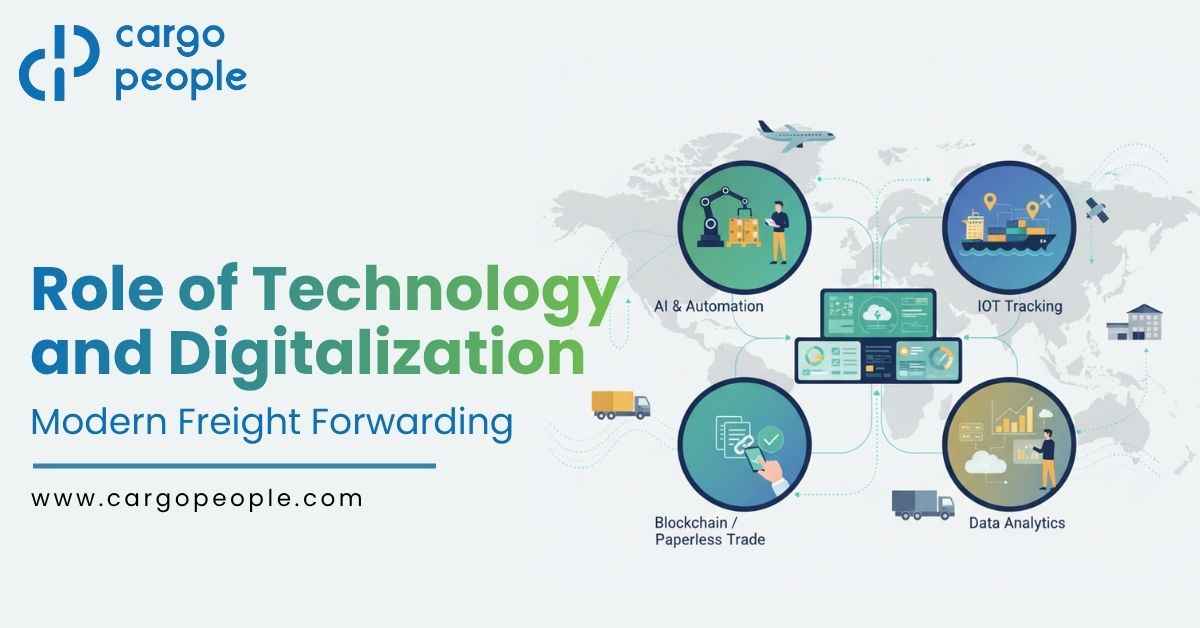
Introduction — A Story from India’s Export Market
Ravi, a sportswear manufacturer from Tirupur, was preparing a crucial shipment for his German buyer. The production was flawless, the quality checks were complete, and the cargo had been stuffed ahead of time. But just as the container reached Nhava Sheva, he received a notification: “Document missing. Shipment on hold.”
A single digital oversight triggered a chain reaction—delays, penalty risk, and a frustrated overseas buyer.
Situations like these are far more common than most businesses admit.
And they are precisely why technology-driven freight forwarding is now the backbone of global trade. In an export-driven economy like India, where margins, timelines, and compliance are tight, the industry is steadily shifting from manual processes to digital-first logistics operations.
Why Digitalisation Matters in Freight Forwarding Today
Indian exporters and importers operate in a highly volatile environment—rate fluctuations, port congestion, customs procedures, and sudden regulatory changes can disrupt even the most predictable supply chains. Traditional forwarding methods depend heavily on manual follow-ups, physical documents, and fragmented communication. This often leads to delays, miscommunication, and unnecessary charges.
Digitalisation transforms this landscape completely.
Why it matters now more than ever:
-
Supply chains demand speed and accuracy
-
Buyer expectations for visibility have increased
-
Documentation requirements have become stricter
-
Port congestion makes real-time planning essential
-
Competition pushes Indian exporters to improve reliability
Technology allows forwarders to work with accuracy, transparency, and predictability—key pillars of modern international trade.
Key Technologies Transforming Freight Forwarding in India
1. Online Shipment Tracking & Real-Time Visibility
One of the biggest pain points for Indian exporters is not knowing where a shipment actually is. Relying on email updates or manual status checks often results in surprise delays.
Modern freight technology integrates vessel data, airline feeds, GPS tracking, and port operations to give a single real-time dashboard.
Impact for Indian shippers and buyers:
-
Live vessel and flight status
-
Predictive ETAs that adjust to port congestion
-
Alerts for delays, transshipment issues, or rollover
-
Clear visibility for buyers overseas
-
Better planning for factory dispatch and warehouse operations
For many small and mid-sized Indian exporters, this visibility alone reduces stress, buyer escalations, and shipment uncertainty.
Example:
A textile exporter from Surat shares tracking credentials with European buyers, reducing their daily inquiry calls and improving buyer satisfaction.
2. Digital Documentation (ICEGATE, e-Sanchit, e-BRC, e-Invoicing)
Most delays, penalties, and customs issues in India arise from documentation errors. Manual paperwork leads to duplication, missing fields, or last-minute mistakes.
Digital document management systems change this by:
-
Auto-generating compliant document formats
-
Uploading directly to ICEGATE and e-Sanchit
-
Tracking document status in real time
-
Offering error validation and checks
-
Providing secure sharing with CHAs, carriers, and overseas buyers
This eliminates the chaos of chasing paperwork and significantly improves customs compliance.
Real scenario:
A Delhi-based importer avoided storage charges simply because a digital alert notified them to upload a Certificate of Origin before vessel arrival.
3. Automation, AI & Integrated TMS/ERP Platforms
Automation has quietly become one of the most powerful tools in freight forwarding. It eliminates repetitive manual tasks that previously consumed large chunks of operational time.
What automation does for Indian forwarding:
-
Auto-selects best routes and carriers
-
Compares freight rates across multiple channels
-
Flags document inconsistencies before customs notices
-
Predicts delay risks using historical data
-
Auto-generates invoices and statements
-
Provides digital checklists for compliance
For importers and exporters, this means fewer surprises, faster turnaround, and more accurate costing.
4. IoT & Smart Container Technologies
While still emerging in India, IoT-based freight tracking has transformed sensitive cargo movement—especially in pharmaceuticals, chemicals, and perishables.
IoT-enabled smart containers provide:
-
Temperature logs
-
Humidity tracking
-
Tamper detection
-
Impact or shock indicators
-
Door open/close alerts
This level of monitoring helps Indian businesses reduce insurance disputes, maintain product quality, and offer greater transparency to overseas buyers.
How Digitalisation Cuts Delays, Costs & Compliance Risks
The biggest challenge in India’s export-import environment is unpredictability—delays due to port congestion, customs backlogs, or incomplete paperwork can cost businesses heavily.
Digital tools reduce these risks by:
-
Ensuring complete documentation before cut-off
-
Predicting ETAs and adjusting plans in advance
-
Providing automated reminders for DO, VGM, or payment deadlines
-
Minimizing detention and demurrage
-
Reducing dependency on manual follow-ups
-
Strengthening compliance with DGFT and CBIC
-
Improving communication between all stakeholders
Instead of reacting to problems, digitalisation allows companies to foresee and prevent them.
Technology Use-Cases at Major Indian Ports
Nhava Sheva (JNPT)
India’s busiest container port often faces vessel queues and peak-season congestion.
Digital milestone tracking provides real-time updates so exporters can adjust trucking, stuffing, and documentation proactively.
Mundra Port
With faster terminal operations, early documentation and digital DO release help speed up cargo movement.
Chennai & Kolkata Ports
Unpredictable weather makes vessel schedules volatile.
Live tracking and predictive ETAs help exporters maintain commitments to buyers.
ICDs (Tughlakabad, Dadri, Nagpur)
Rail schedules can shift due to operational reasons.
Digital alerts help plan gate-in and stuffing activities with minimum uncertainty.
Data Tables That Strengthen Decision-Making
Table 1: Top Indian Ports by Container Volume (2021–2023)
| Port | 2021 (TEUs) | 2022 (TEUs) | 2023 (TEUs) | Growth Trend |
|---|---|---|---|---|
| JNPT (Nhava Sheva) | 5.63M | 5.68M | 6.03M | Rising |
| Mundra | 5.70M | 6.00M | 6.50M | Strong growth |
| Chennai | 1.30M | 1.32M | 1.38M | Moderate rise |
| Kolkata | 0.82M | 0.89M | 0.92M | Steady |
| Hazira | 0.68M | 0.74M | 0.80M | Fastest CAGR |
Why this matters:
Over half of India’s EXIM container movement passes through JNPT and Mundra.
Visibility at these ports directly influences shipment reliability.
Table 2: Air vs Sea vs Rail Freight in India
| Mode | Avg Cost | Transit Time | Best For | Digital Tracking |
|---|---|---|---|---|
| Air | Highest | 1–5 days | Urgent or high-value cargo | Strong |
| Sea FCL | Lowest | 18–40 days | Heavy or bulky shipments | Good |
| Sea LCL | Medium | 20–45 days | Multiple small consignments | Good |
| Rail | Medium | 3–10 days | Inland container movement | Moderate |
Interpretation:
Even though sea is more economical, digital tracking improves predictability across all modes, especially crucial when shipping time-sensitive cargo.
Hidden Compliance Risks in Indian Shipping (And How Technology Prevents Them)
Common compliance risks:
-
Wrong HS code leading to valuation queries
-
Delayed or missing Certificate of Origin
-
Weight mismatch resulting in scanning delays
-
Incorrect packaging details causing examination
-
Late VGM submission leading to cargo roll-over
-
Delayed DO causing detention charges
How digitalisation prevents them:
-
Automated document validation
-
Built-in compliance checklists
-
Alerts for document deadlines
-
Instant digital sharing with CHAs and buyers
-
Error detection before submission
-
Transparent audit trails
Illustrative example:
A Morbi ceramics exporter once paid significant penalties after customs flagged carton misdeclaration. An automated digital checklist would have identified the discrepancy before shipment, avoiding unnecessary costs.
Mini Business Stories from Indian Exporters and Importers
1. Tirupur Apparel Exporter Saves on Freight
By using predictive ETAs and smarter consolidation, an exporter avoided peak airfreight rates and saved substantial shipping costs.
2. Mumbai Auto-Parts Manufacturer Improves Clearance Time
Digital document coordination helped them cut clearance time at Nhava Sheva by nearly 40%.
3. Delhi Importer Avoids Detention Charges
A timely digital alert helped coordinate immediate container release, preventing unnecessary detention fees.
How Cargo People Uses Technology to Deliver Reliable Freight Solutions
Cargo People integrates robust digital tools to streamline freight for Indian exporters and importers.
The focus is simple: predictability, visibility, and compliance.
Our capabilities include:
-
Real-time shipment dashboards
-
Automated digital documentation
-
Predictive ETAs and delay alerts
-
API integrations with airlines and shipping lines
-
Customised milestone updates for each shipment
-
Strong CHA and compliance expertise
-
Route optimization for major global trade corridors
This ensures that businesses not only ship cargo efficiently but also avoid the hidden costs and delays common across Indian ports.
Conclusion — Why Digital Freight Forwarding Is Essential Today
Global supply chains are no longer driven by paper, manual tracking, or disconnected communication. They are powered by data, automation, and real-time visibility.
For Indian exporters and importers, adopting freight forwarder technology is not merely an upgrade—it is a business necessity.
It reduces unpredictability, keeps buyers informed, avoids unnecessary charges, and ensures compliance in a fast-moving trade environment.
Companies that embrace digitalisation gain a competitive edge. Those that do not face increasing risks, delays, and costs.
CTA — Book a Consultation with Cargo People Logistics
📞 +91 78350 06245
📧 Cha@cargopeople.com
Schedule Your Consultation Today