

 USA
USA
 United Kingdom
 Germany
 Argentina
 Australia
 Canada
 New Zealand
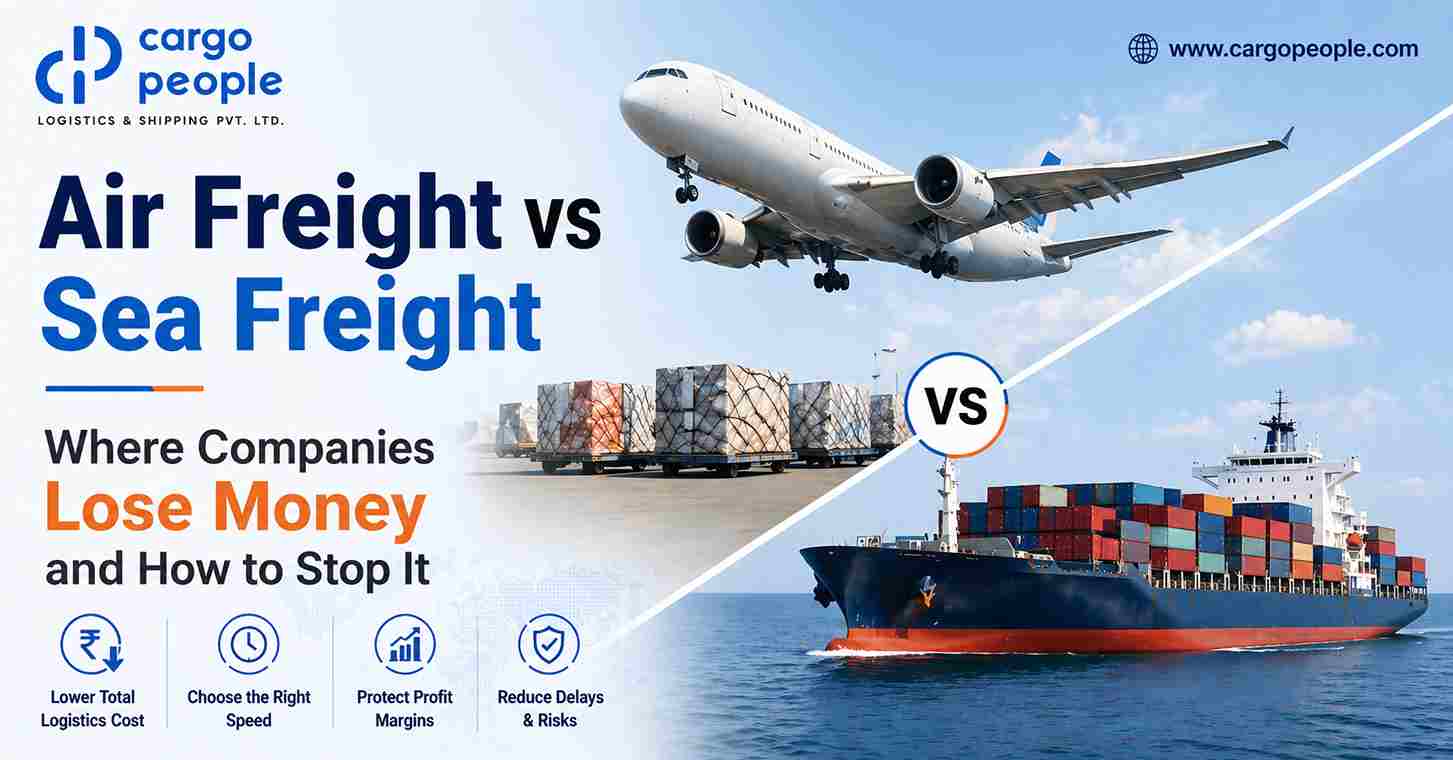
A mid-sized importer in Mumbai decided to shift from air freight to sea freight to reduce logistics expenses. On the surface, the decision looked financially sound. The company reduced its freight cost from ₹4.5 lakh per shipment to ₹2 lakh, saving ₹2.5 lakh.
However, the operational reality was different. The shipment took over 30 days to arrive instead of under a week. During this time, nearly ₹60 lakh worth of inventory remained in transit, blocking working capital. The company also faced port congestion delays of 5 days, which resulted in demurrage charges of ₹75,000.
By the time the goods reached the warehouse, the demand window had already passed. The company had to sell inventory at discounted prices, resulting in further margin loss. When all costs were considered, the company incurred a net loss of over ₹2 lakh.
This is a classic example of how businesses miscalculate air freight vs sea freight cost comparison by focusing only on freight rates and ignoring operational impact.
Air Freight vs Sea Freight – Core Operational Differences
Air Freight – Speed, Control, and Predictability
Air freight is designed for speed and precision. It operates on fixed airline schedules and involves fewer handling stages, which significantly reduces the risk of delays.
Cargo typically becomes available within 6 to 12 hours after landing, and customs clearance is completed within 24 to 72 hours. This ensures faster movement of goods and allows businesses to maintain lean inventory levels.
Because of its speed, air freight supports faster inventory turnover. Businesses can restock more frequently, respond quickly to market demand, and avoid overstocking. Although the cost per kilogram is higher, the reduction in indirect costs often balances the overall expense.
Air freight is commonly used for:
- High-value goods such as electronics and luxury items
- Time-sensitive shipments like pharmaceuticals
- Urgent replenishment stock
- Perishable goods requiring quick delivery
Sea Freight – Cost Advantage with Operational Complexity
Sea freight is built for volume and cost efficiency, but it comes with significantly higher operational complexity. Unlike air freight, sea shipments pass through multiple stages including container stuffing, port handling, vessel scheduling, and unloading.
The transit time ranges from 20 to 35 days, and port dwell time adds another 3 to 5 days, which can extend to 7 to 10 days during congestion. Each additional day increases cost exposure and operational uncertainty.
Sea freight is highly dependent on external factors such as port congestion, weather conditions, and container availability. These variables make timelines less predictable compared to air freight.
It is best suited for:
- Bulk shipments
- Heavy machinery
- Low-value goods
- Non-urgent inventory
While sea freight reduces upfront shipping cost, it increases indirect costs such as inventory holding and delay-related expenses.
Air Freight vs Sea Freight Process – Operational Workflow Comparison
Air Freight Process
Air freight follows a streamlined and time-efficient process. Once cargo is booked, it is delivered to the airport terminal where documentation and security checks are completed. Customs clearance is initiated through ICEGATE, and once approved, the cargo is loaded onto the aircraft.
The entire cycle, from origin to final delivery, is typically completed within 3 to 7 days. The limited number of handling stages reduces the chances of delay, making air freight a reliable option for urgent shipments.
Sea Freight Process
Sea freight involves multiple stages, each with its own operational dependencies. After booking, cargo is stuffed into containers and transported to the port. It undergoes customs clearance before being loaded onto the vessel.
Once the vessel departs, cargo remains in transit for several weeks. Upon arrival, containers must be unloaded, cleared by customs, and transported to the final destination. This entire process can take 20 to 35 days or more, depending on route and port conditions.
The extended timeline increases exposure to delays and additional costs, especially during peak seasons.
TABLE 1 – Logistics Process Overview
| Process Stage | Authority | Timeline Air | Timeline Sea | Risk if Delayed |
|---|---|---|---|---|
| Booking | Airline or Shipping Line | 1 day | 2 to 3 days | Space constraints |
| Origin Clearance | Customs | 24 to 48 hrs | 2 to 3 days | Missed departure |
| Transit | Carrier | 3 to 7 days | 20 to 35 days | Demand mismatch |
| Destination Clearance | Customs | 24 to 72 hrs | 3 to 7 days | Demurrage |
| Delivery | Transporter | 1 to 2 days | 2 to 4 days | Supply disruption |
Longer timelines in sea freight increase the probability of financial loss.
Where Companies Lose Money in Air Freight vs Sea Freight
Inventory Carrying Cost – The Most Overlooked Expense
When cargo is in transit, capital remains blocked. For high-value shipments, this becomes a significant financial burden.
For example, a shipment valued at ₹50 lakh in sea transit for 30 days results in a carrying cost of approximately ₹50,000 to ₹70,000, assuming a 12 percent annual interest rate. This cost is often ignored during planning but directly affects profitability.
Air freight reduces this burden by shortening the transit cycle and improving cash flow.
Demurrage and Detention Charges – Direct Financial Impact
Sea freight delays often result in demurrage and detention charges. Ports allow a limited free period of 3 to 5 days. Beyond this, daily charges apply.
Demurrage typically ranges from ₹7,000 to ₹15,000 per container per day, while detention charges range from ₹5,000 to ₹12,000 per day. A delay of just 5 days can add ₹50,000 or more to the shipment cost.
These costs are unavoidable once delays occur and directly reduce profit margins.
Missed Sales Opportunity – Market Timing Loss
In many industries, timing is critical. Delayed shipments can lead to missed sales opportunities, especially during peak seasons.
Businesses may face:
- Stockouts during high demand
- Forced discounting to clear delayed inventory
- Loss of customer trust
Even a delay of 7 to 10 days can significantly impact revenue.
Production Disruption – Manufacturing Impact
For manufacturers, delayed shipments can halt production lines. This leads to idle labor, underutilized machinery, and contractual penalties.
Depending on the scale of operations, losses can range from ₹1 lakh to ₹5 lakh per day. This makes timing a critical factor in choosing between air freight vs sea freight.
Cost Breakdown – Air Freight vs Sea Freight
Air Freight Cost Structure
Air freight costs include freight charges per kilogram, terminal handling, customs clearance, and delivery. While the upfront cost is higher, the shorter cycle reduces indirect expenses.
Sea Freight Cost Structure
Sea freight includes ocean freight, terminal handling charges, container costs, customs clearance, and inland transport. However, additional hidden costs such as inventory holding, demurrage, and detention significantly increase total expense.
In many cases, the difference between air freight vs sea freight becomes minimal when all costs are considered.
TABLE 2 – Documentation Checklist
| Document | Air Freight | Sea Freight | Risk if Missing |
|---|---|---|---|
| Commercial Invoice | Required | Required | Clearance delay |
| Packing List | Required | Required | Inspection delay |
| AWB or BL | AWB | Bill of Lading | Cargo hold |
| IEC Code | Required | Required | Filing rejection |
| Bill of Entry | Required | Required | No clearance |
Accurate documentation ensures faster clearance and reduces delay risk by over 50 percent.
Logistics Risks in Air Freight vs Sea Freight
Every shipment carries risk, but the level of risk varies significantly between modes.
Sea freight is more exposed to:
- Port congestion adding 3 to 7 days delay
- Container shortages during peak periods
- Weather-related disruptions
- Multiple handling stages increasing error probability
Air freight, while faster, faces risks such as missed cut-off times and capacity constraints, but overall remains more predictable.
Practical Business Scenarios
A company that chose sea freight to save ₹1.8 lakh ended up losing ₹3 lakh due to delays and missed demand. Another importer faced a 6-day delay at JNPT, resulting in ₹90,000 demurrage.
In contrast, a business that opted for air freight for urgent inventory spent ₹1.2 lakh extra but secured a ₹5 lakh revenue opportunity. These examples highlight the importance of strategic decision-making in air freight vs sea freight.
Decision Guide – Choosing the Right Mode
Businesses should not rely on a single mode for all shipments. The decision must be based on urgency, value, and market demand.
Air freight is ideal when speed is critical, inventory is high value, and demand is time-sensitive. Sea freight is suitable when shipment volume is large, cost is a priority, and delivery timelines are flexible.
A balanced approach, using both modes strategically, often delivers the best results.
Role of Freight Forwarder in Air Freight vs Sea Freight Optimization
A freight forwarder plays a key role in optimizing logistics decisions. They analyze shipment requirements, recommend the right mode, and manage execution.
Their responsibilities include:
- Mode selection based on cost and urgency
- Route and carrier optimization
- Documentation and compliance handling
- Customs coordination
- Risk mitigation
With proper planning, businesses can reduce logistics costs by 15 to 30 percent and improve delivery reliability.
Conclusion – Air Freight vs Sea Freight
The comparison of air freight vs sea freight is not about choosing the cheaper option. It is about choosing the most efficient and cost-effective solution for your business.
Air freight offers speed and reduces operational risk, while sea freight offers cost advantage but increases exposure to delays. Hidden costs such as inventory holding and demurrage can increase total expense by 20 to 40 percent.
Businesses that evaluate total logistics cost rather than just freight rates make better decisions and achieve higher profitability.
CTA – Cargo People
📞 +91 97174 65454
📧 wecare@cargopeople.com
👉 Get a Shipping Quote from Cargo People Logistics
FAQs
1. Which is better air freight vs sea freight
Air freight is faster while sea freight is cheaper. The right choice depends on urgency and cost impact.
2. How much faster is air freight
Air freight is typically 4 to 5 times faster than sea freight.
3. What is the biggest hidden cost in shipping
Inventory carrying cost and demurrage charges.
4. When should businesses use air freight
For urgent, high-value, and time-sensitive shipments.
5. What causes delays in sea freight
Port congestion, customs delays, and container availability.