

 United Kingdom
 Germany
 Argentina
 Australia
 Canada
 New Zealand
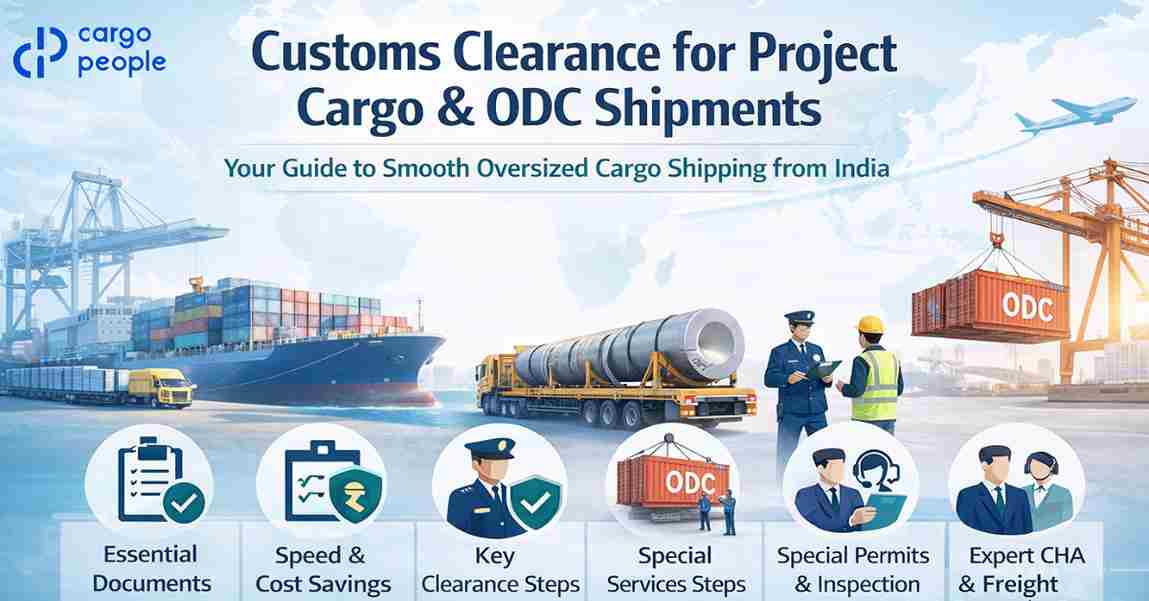
A heavy engineering manufacturer in Gujarat recently imported oversized machinery for a power project. The shipment reached Mundra Port on schedule, vessels were booked correctly, and inland transport was ready. Yet, customs clearance stalled for nearly two weeks because a technical write-up was incomplete.
Each passing day added demurrage, crane standby charges, and pressure from the project site team. What should have been a routine clearance turned into a costly delay — not due to freight issues, but because customs preparation was underestimated.
This is the reality for many Indian importers handling project cargo and ODC shipments. Customs clearance is not a backend task; it is one of the most critical stages that determines whether a project stays on track or slips into avoidable losses.
Understanding Project Cargo & ODC Shipments in the Indian Customs Framework
Project cargo and ODC shipments involve equipment that is oversized, overweight, high-value, or technically complex. From turbines and reactors to large manufacturing machinery, these shipments attract closer scrutiny from Indian customs authorities.
Unlike standard cargo, customs officers evaluate not just documents, but also technical specifications, end-use, valuation logic, and compliance with import policy conditions. For businesses, this means customs clearance becomes a strategic process rather than a transactional one.
From a customs perspective, project cargo is often linked to capital investment, infrastructure development, or industrial expansion. Any inconsistency in documentation or classification raises red flags, which can slow down clearance significantly.
Customs typically focuses on:
-
Cargo dimensions, weight, and handling method
-
Correct HS code classification for machinery or equipment
-
Declared value and valuation justification
-
Import policy restrictions and licenses
-
End-use declarations and project linkage
-
Safety and examination requirements at the port
Understanding this mindset helps businesses prepare better and avoid last-minute surprises.
Documents Required for Customs Clearance of Project & ODC Cargo
Documentation is the foundation of smooth customs clearance, especially for project and ODC shipments. Unlike regular imports, these shipments require deeper technical and commercial clarity.
Customs officers rely heavily on paperwork to understand what the cargo is, how it will be used, and whether the declared value and duty are appropriate. Missing or vague documents almost always result in queries or physical examination delays.
Key documents typically required include:
-
Commercial invoice with accurate valuation details
-
Packing list mentioning exact dimensions and weight
-
Bill of Lading or Airway Bill
-
Detailed technical write-up explaining functionality and use
-
Technical drawings, catalogues, or brochures
-
HS code justification for oversized or specialized equipment
-
Import Export Code (IEC)
-
Insurance certificate
-
Project Import Registration documents, if applicable
Well-prepared documentation not only speeds up clearance but also builds credibility with customs authorities.
How Customs Clearance for Project Cargo Works in Practice
The customs clearance process for project cargo follows a structured flow, but with additional layers of scrutiny compared to standard cargo. Each stage must be aligned with port operations, handling equipment availability, and examination planning.
From filing documents to final cargo release, coordination plays a major role. Delays often occur when customs examination planning is not aligned with port or terminal operations.
The typical process includes:
-
Pre-arrival review of documents and classification
-
Advance filing of Bill of Entry to reduce dwell time
-
Registration under project import benefits where applicable
-
Coordination for customs examination of heavy or sensitive cargo
-
Duty assessment and payment
-
Physical examination and compliance checks
-
Customs out-of-charge and cargo release
Businesses that prepare early and involve experienced logistics partners often clear project cargo faster and with fewer disruptions.
Customs Clearance Timelines for Project & ODC Cargo in India
Customs clearance timelines vary significantly depending on cargo type, documentation quality, and port infrastructure. Project cargo almost always takes longer than standard shipments due to its complexity.
What many businesses underestimate is how quickly delays can compound. A few extra days at customs can trigger cascading costs across transport, installation, and manpower planning.
Typical clearance timelines businesses should plan for:
-
Standard import cargo: a few working days
-
Project cargo: over a week in most cases
-
ODC and heavy-lift cargo: multiple weeks if planning is weak
For project-based industries, factoring these timelines into overall project planning is essential to avoid financial strain.
Choosing the Right Indian Port for Project & ODC Cargo
Port selection plays a critical role in customs clearance efficiency. Not all ports are equally equipped to handle oversized or heavy cargo, and this directly impacts examination speed and cargo evacuation.
Ports with strong heavy-lift infrastructure, experienced customs officers, and efficient coordination between terminals and authorities tend to clear project cargo more smoothly.
Factors businesses should consider while choosing a port:
-
Availability of heavy-lift cranes and equipment
-
Experience in handling ODC and project cargo
-
Customs examination efficiency
-
Connectivity to inland transport routes
-
Congestion levels and terminal coordination
Choosing the wrong port can result in operational bottlenecks that delay clearance even when documentation is perfect.
Compliance Risks That Commonly Delay Project Cargo Clearance
One of the most common issues in project cargo clearance is incorrect HS code classification. Even small discrepancies between technical documents and declared classification can trigger revaluation or reassessment by customs.
In one instance, an importer faced prolonged detention because the machine’s declared HS code did not align with its actual function described in the technical catalogue. Customs ordered additional verification, delaying the shipment and increasing duty exposure.
Common compliance risks include:
-
Incorrect HS code selection
-
Incomplete or unclear technical write-ups
-
Undervaluation or inconsistent invoice details
-
Missing project import registration
-
Lack of advance customs consultation
Proactive compliance planning helps businesses avoid these pitfalls before the cargo even arrives.
Role of Freight Forwarders and CHAs in Project Cargo Clearance
For project cargo, freight forwarders and Customs House Agents play a much larger role than simple document filing. They act as advisors who anticipate customs concerns and address them proactively.
Their experience helps businesses navigate valuation challenges, technical queries, and examination planning — areas where internal teams often struggle.
They support businesses by:
-
Reviewing documentation before shipment arrival
-
Advising on HS codes and duty implications
-
Coordinating with customs officers during examination
-
Aligning port operations with clearance timelines
-
Reducing demurrage and detention risks
For complex shipments, this expertise often saves far more than it costs.
A Small Story That Shows the Power of Planning
A renewable energy company importing wind turbine components planned customs clearance well in advance. Technical documents were shared early, examination schedules were aligned with port equipment availability, and duties were calculated accurately.
As a result, the shipment cleared faster than expected, installation timelines stayed intact, and unnecessary storage costs were avoided. The difference was not luck — it was preparation.
Why Customs Planning Determines Project Success
Project cargo shipments are unforgiving. Delays in customs clearance don’t just affect logistics; they disrupt project execution, contractor schedules, and cash flow.
Businesses that treat customs planning as a strategic function gain control over costs, timelines, and compliance risks.
Effective customs planning helps you:
-
Avoid shipment delays and penalties
-
Control landed cost
-
Reduce demurrage and detention
-
Maintain project schedules
-
Ensure long-term compliance
Conclusion — How Cargo People Supports Your Project Cargo Shipments
Customs clearance for project cargo and ODC shipments requires experience, technical understanding, and proactive coordination. Ignoring these complexities often results in avoidable losses and operational stress.
At Cargo People Logistics, we help Indian importers and exporters plan customs clearance with clarity and confidence — so your project cargo moves without disruption.
📞 +91 9717465454 | 📧 wecare@cargopeople.com
Book a Consultation with Cargo People Logistics