

 USA
USA
 United Kingdom
 Germany
 Argentina
 Australia
 Canada
 New Zealand
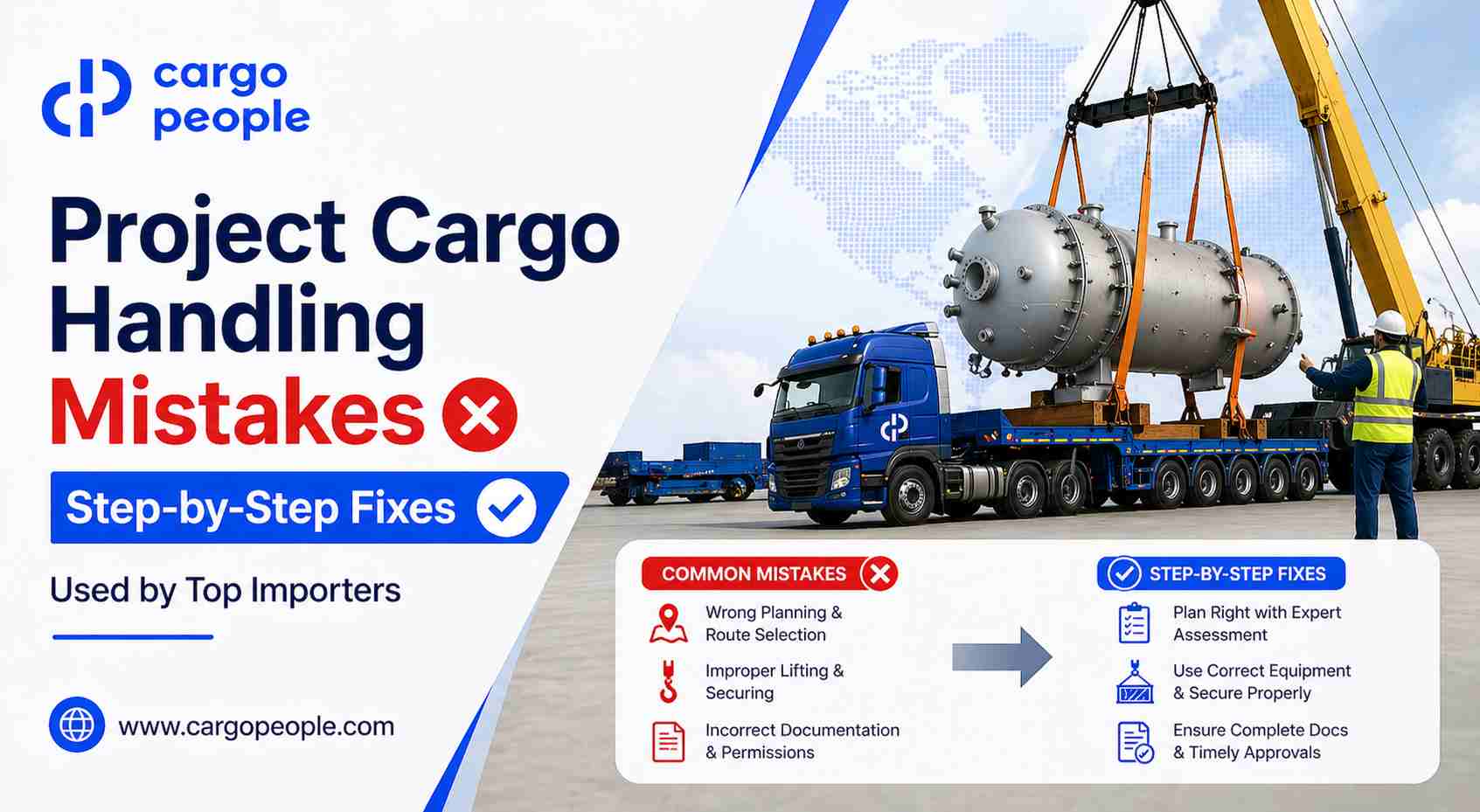
In 2025, an engineering importer moved heavy equipment through Nhava Sheva port. Due to an incorrect HS code declaration, the cargo was flagged for inspection. Clearance was delayed by 6 days, increasing dwell time at the port. With demurrage charges averaging ₹12,000 per day, the importer incurred ₹72,000 in additional cost.
This type of loss is common. Across major ports like Mundra, Chennai, and Vizag, delays of 3 to 7 days are frequently seen. For project cargo shipments, even a 48-hour delay can impact production schedules, contract commitments, and working capital cycles.
Understanding Project Cargo Handling in India
Project cargo involves transporting oversized, heavy, and high-value equipment such as turbines, manufacturing machinery, and infrastructure components. These shipments are not containerized in standard formats and require customized handling, specialized equipment, and multi-level approvals.
India handles a significant portion of project cargo through ports like Nhava Sheva with more than 7 million TEUs annually, Mundra with over 6 million TEUs, and Chennai, which is a major hub for industrial cargo. Despite infrastructure improvements, average cargo dwell time still ranges between 2 to 5 days, and during peak periods, it can extend up to 7 days.
The complexity lies in coordination. Project cargo requires alignment between customs authorities under the Customs Act 1962, ICEGATE digital systems, port authorities, transport departments, and sometimes DGFT approvals. A delay at any one stage creates a cascading effect across the supply chain, increasing both cost and risk.
Step-by-Step Project Cargo Logistics Process
Project cargo logistics follows a structured but highly sensitive process where every stage directly impacts cost and delivery timelines. The process begins with cargo planning, where dimensions, weight, and handling requirements are finalized. This is followed by a route survey that checks road feasibility, bridge capacity, and clearance restrictions for oversized cargo.
Once planning is completed, freight booking is done with shipping lines or airlines. Cargo is then moved to the port terminal where documentation is prepared and submitted through ICEGATE. Customs clearance, if documentation is accurate, takes around 24 to 72 hours. However, if the shipment is selected for inspection, the timeline can extend by another 24 to 72 hours.
After clearance, cargo is loaded using specialized cranes and equipment. For sea freight, transit time typically ranges from 20 to 45 days depending on route, while air freight shipments are delivered within 3 to 7 days. Upon arrival, customs clearance is repeated, followed by inland transportation to the final destination.
In real operations, delays often occur due to poor coordination between these stages. For example, if route permissions are not ready before cargo arrival, the shipment may remain idle at the port, increasing demurrage costs.
Logistics Process Table
| Stage | Authority | Timeline | Documents | Risk |
|---|---|---|---|---|
| Cargo Planning | Importer / Forwarder | 2 to 5 days | Invoice, Packing List | incorrect cargo specs |
| Route Survey | Transport Authority | 3 to 7 days | Route permits | road restrictions |
| Customs Filing | ICEGATE / CBIC | 24 to 72 hrs | Bill of Entry | inspection delay |
| Port Handling | Port Authority | 1 to 3 days | Delivery Order | congestion |
| Inland Delivery | Transporter | 2 to 10 days | E-way Bill | route clearance |
Documentation Workflow: The Most Critical Risk Area
Documentation is the most sensitive part of project cargo handling. Around 60% of delays in project cargo shipments are linked to documentation errors. Even a minor mismatch between invoice value and packing list details can trigger customs scrutiny.
The core documents include commercial invoice, packing list, bill of lading, bill of entry, and technical specifications of cargo. These must match exactly with customs requirements and be filed correctly through ICEGATE. Incorrect HS code classification is one of the most common issues, leading to wrong duty calculation and increasing inspection probability.
In India, customs inspection rates range between 10% to 20%. If cargo is selected, clearance time increases by 24 to 72 hours. In some cases, physical inspection may require revaluation or additional documentation, extending delays further.
Experienced importers conduct pre-documentation audits before cargo dispatch. They verify all details, align HS codes with product classification, and ensure compliance with regulatory requirements.
Documentation Table
| Document | Issued By | Purpose | Risk |
|---|---|---|---|
| Commercial Invoice | Exporter | Value declaration | mismatch value |
| Packing List | Exporter | Cargo details | incorrect dimensions |
| Bill of Lading | Shipping Line | Ownership proof | delay in release |
| Bill of Entry | Importer/CHA | Customs clearance | wrong HS code |
Cost Breakdown: Where Importers Actually Spend
In project cargo logistics, freight cost typically contributes 40% to 60% of the total logistics expense. The remaining cost comes from handling, compliance, and transportation activities.
Sea freight is the most commonly used mode for project cargo because it can handle heavy and oversized shipments. Transit time ranges between 20 to 45 days depending on the route. Air freight is faster, with delivery timelines of 3 to 7 days, but it is 4 to 6 times more expensive and limited by cargo size.
Terminal handling charges, customs duty, documentation fees, and inland transport form a significant part of the cost. However, the biggest hidden expense comes from demurrage and detention. At Indian ports, demurrage ranges from ₹7,000 to ₹15,000 per day per container.
A delay of 3 to 5 days can increase total logistics cost by ₹25,000 to ₹75,000 or more. For large project cargo, these costs multiply further due to additional equipment and handling requirements.
Common Project Cargo Mistakes and Their Fixes
Most project cargo issues arise from predictable mistakes. The first major mistake is late planning. Many importers begin logistics coordination after cargo is ready, leaving no buffer for route surveys or documentation checks. This results in delays at the port and increased costs.
The second major mistake is incorrect documentation. Errors in HS code, invoice details, or cargo specifications lead to inspections and clearance delays. Another common issue is ignoring port congestion trends. Ports like Nhava Sheva and Chennai frequently experience congestion, increasing dwell time from 2 days to 5 days or more.
Top importers follow structured processes to avoid these problems. They plan shipments at least 2 to 3 weeks in advance, conduct documentation checks before dispatch, and monitor port conditions in real time.
Key corrective actions include:
 Pre-clearance documentation verification before cargo arrival
Advance booking of handling equipment at port
Coordination with transporters for route permissions
Real-time communication with customs brokers
Risks and Delays in Project Cargo Handling
Project cargo shipments face multiple operational risks. Customs inspection remains one of the biggest uncertainties, affecting 10% to 20% of shipments. Each inspection can add 24 to 72 hours to clearance time.
Port congestion is another major factor. During peak periods, dwell time increases from 2 days to 5 to 7 days. This directly impacts delivery timelines and increases demurrage costs.
Air freight shipments face risks related to airline cut-offs and space availability, while sea freight shipments depend on vessel schedules and port handling efficiency. Documentation errors continue to be the most common and avoidable cause of delays.
Each delay directly translates into financial impact, including storage charges, demurrage, and operational disruption at the destination.
Practical Business Scenarios
In one scenario, a manufacturing company importing machinery via sea freight faced a 5-day delay due to congestion and documentation issues. This resulted in demurrage charges of ₹60,000 and production losses exceeding ₹3 lakh.
In another case, an importer selected air freight for urgent delivery but failed to prepare documents in advance. The cargo was held at the airport for 48 hours, eliminating the time advantage of air transport.
A third example involved oversized cargo where route permissions were not arranged beforehand. The shipment was delayed by 3 days due to road restrictions, increasing logistics cost and impacting project timelines.
Decision Guide: Choosing Between Air and Sea Freight
Choosing between air and sea freight depends on urgency, cargo size, and cost sensitivity. Air freight is suitable for time-critical shipments, delivering within 3 to 7 days. However, it is significantly more expensive and limited by cargo dimensions.
Sea freight is more suitable for heavy and oversized cargo, with transit times ranging between 20 to 45 days. It is cost-effective but requires better planning due to longer timelines and port-related risks.
For project cargo, most shipments move via sea freight, but hybrid models combining sea and road transport are often used to balance cost and efficiency.
Role of Freight Forwarder in Project Cargo
Freight forwarders play a critical operational role in project cargo handling. Their responsibility includes planning cargo movement, managing documentation, coordinating with shipping lines, and ensuring compliance with customs regulations.
They also manage risks by anticipating delays, arranging alternative routes, and ensuring availability of equipment. In complex logistics environments, the forwarder acts as the central coordinator between all stakeholders.
Their involvement helps reduce delays, optimize cost, and ensure timely delivery of cargo.
Conclusion
Project cargo handling is a high-risk logistics function where even small mistakes can lead to significant financial losses. With demurrage charges reaching ₹15,000 per day and clearance delays extending beyond 72 hours, poor planning can severely impact business operations.
Successful importers focus on structured planning, accurate documentation, and proactive coordination across all stages of logistics. They understand that logistics is not just about moving cargo, but about managing time, cost, and risk together.
For businesses looking to reduce delays and improve efficiency in project cargo movement, working with experienced logistics partners is essential. You can explore more about reliable logistics solutions at https://www.cargopeople.com/
 CTA – Cargo People Logistics
📞 +91 97174 65454
📧 wecare@cargopeople.com
👉 Get a Shipping Quote from Cargo People Logistics
FAQs
1. What is project cargo in logistics?
Project cargo refers to oversized and heavy shipments that require special handling and planning.
2. How long does customs clearance take in India?
Typically 24 to 72 hours depending on documentation accuracy and inspection.
3. What are demurrage charges in India?
Between ₹7,000 to ₹15,000 per day depending on port and cargo type.
4. What causes delays in project cargo shipments?
Documentation errors, customs inspections, and port congestion.
5. Is air freight suitable for project cargo?
Only for smaller and urgent components due to size and cost limitations.