

 USA
USA
 United Kingdom
 Germany
 Argentina
 Australia
 Canada
 New Zealand
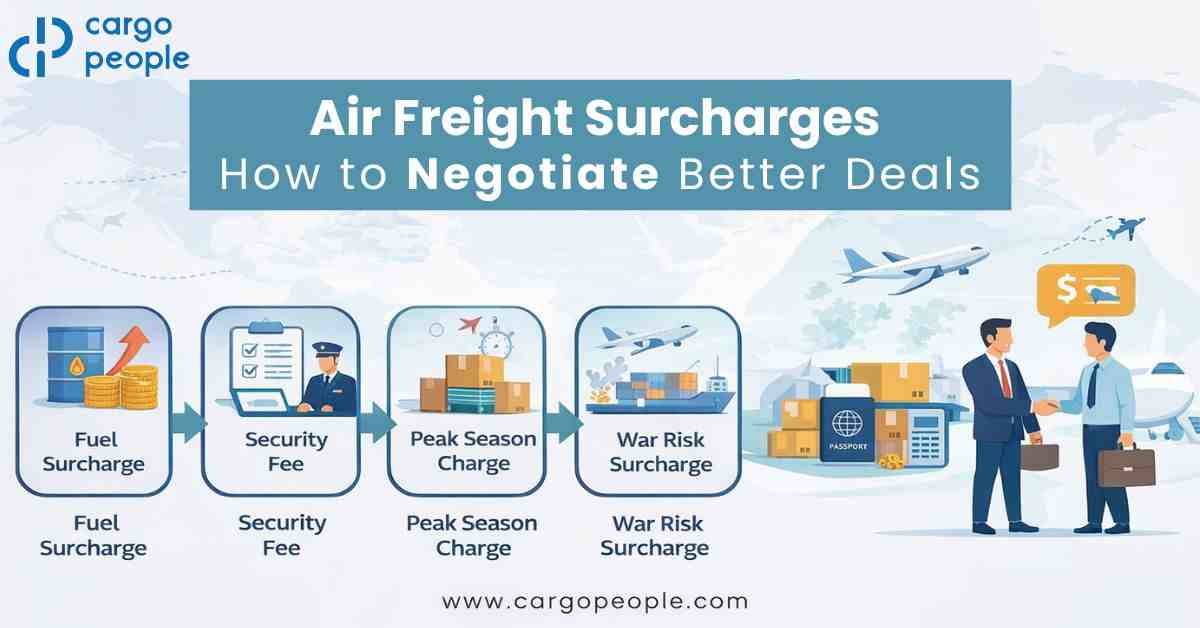
A mid-sized electronics exporter from Noida once shared a familiar frustration. The shipment to Germany was urgent, the air freight quote looked acceptable, and production timelines were tight. But when the final invoice arrived, the cost was far higher than expected. Fuel surcharge, peak season surcharge, and additional handling fees had quietly crept in.
The shipment reached on time, but the exporter’s margins took a hit. The bigger concern was not the delay — it was the lack of clarity around air freight surcharges.
This is exactly why understanding air freight surcharges and negotiation strategies is no longer optional for Indian exporters. It’s essential for cost control.
Understanding Air Freight Surcharges in India
Air freight pricing is layered. What appears as a simple per-kg rate often expands into multiple cost components by the time cargo is uplifted. For Indian businesses shipping from major gateways like Delhi, Mumbai, Chennai, or Bengaluru, these surcharges can significantly affect profitability.
What Are Air Freight Surcharges?
Air freight surcharges are additional charges applied over the base freight rate to account for fluctuating operational, regulatory, and capacity-related costs. Airlines use these to protect themselves from volatility, but for shippers, they can feel unpredictable if not explained upfront.
Typical surcharges applied on exports from India include:
-
Fuel surcharge to offset aviation fuel price fluctuations
-
Security surcharge for mandatory screening and compliance
-
Peak season surcharge during high-demand export periods
-
Terminal handling charges at origin airports
-
Documentation and screening-related fees
Each surcharge may seem small in isolation, but combined, they can materially change the total air freight cost.
Common Air Freight Surcharges and Their Impact
| Surcharge Type | Why It Exists | Cost Impact on Exporters |
|---|---|---|
| Fuel Surcharge | Airline fuel price volatility | 10–30% of base freight |
| Security Surcharge | Cargo screening & compliance | Fixed per kg |
| Peak Season Surcharge | High demand periods | ₹20–₹60 per kg |
| Terminal Handling Charges | Airport handling & storage | ₹1–₹3 per kg |
| Documentation Fees | AWB & export paperwork | Flat charge |
What this means for Indian exporters:
Without visibility into these components, businesses often underestimate their landed cost. Over time, this leads to pricing errors, reduced margins, and difficulty quoting customers accurately.
What Really Drives Air Cargo Pricing from India
Air cargo pricing is influenced by far more than distance and weight. For Indian exporters, both global and domestic factors shape how air freight costs behave.
Key Drivers Behind Air Freight Cost India
Several forces work simultaneously:
-
Fuel price movements, which directly influence fuel surcharges
-
Aircraft capacity constraints, especially on India–USA and India–Europe lanes
-
Seasonal export cycles, including festive demand, fashion seasons, and pharma peaks
-
Route congestion at major Indian airports
-
Global disruptions, such as geopolitical tensions or rerouting of aircraft
These factors explain why air cargo pricing can change quickly — sometimes week to week.
Air vs Sea vs Rail — Cost and Time Perspective
| Transport Mode | Cost Level | Transit Time | Suitable For |
|---|---|---|---|
| Air Freight | High | 3–7 days | Urgent, high-value cargo |
| Sea Freight | Low | 25–35 days | Bulk, non-urgent cargo |
| Rail | Medium | 18–22 days | Balanced cost & speed |
Business insight:
Air freight is rarely chosen because it is cheap. It is chosen because it protects revenue, commitments, and customer trust. The goal is not to avoid air freight — it is to use it strategically and cost-effectively.
How to Negotiate Better Air Freight Deals
Contrary to popular belief, air freight pricing is not entirely fixed. Many Indian exporters overpay simply because they negotiate only the base rate and ignore surcharge levers.
Practical Negotiation Levers Exporters Can Use
Successful negotiation begins with preparation:
-
Volume predictability: Airlines reward consistent monthly cargo flows
-
Cargo consolidation: Sharing capacity lowers per-kg surcharge exposure
-
Advance planning: Early bookings reduce exposure to peak season surcharges
-
Flexible routing: Alternative hubs can unlock better pricing
-
All-inclusive pricing discussions: Focus on total cost, not headline rates
A skilled freight forwarder acts as a buffer between the exporter and volatile airline pricing, translating market dynamics into cost advantages.
Why Negotiation Fails for Many Exporters
Negotiations often fail because:
-
Pricing discussions happen too late
-
Exporters focus only on base freight
-
Cargo data is inconsistent or inaccurate
-
There is no long-term shipment visibility
Negotiation works best when freight planning becomes part of the export strategy, not a last-minute operational task.
Compliance and Operational Risks That Increase Costs
Hidden costs often arise not from pricing, but from compliance lapses and operational oversights.
A Common Risk Scenario
An auto-component exporter shipped sensitive cargo without accurate classification. The cargo was flagged for additional screening, missed its planned flight, and incurred re-handling and storage charges.
Impact on the business:
-
Shipment delay
-
Unexpected cost escalation
-
Customer dissatisfaction
How Proactive Planning Helps
-
Correct cargo declaration and classification
-
Pre-screening alignment with airline requirements
-
Documentation checks before cargo reaches the terminal
Compliance is not just about avoiding penalties — it is about protecting timelines and cost predictability.
Mini Business Stories from Indian Exporters
A textile exporter from Tirupur reduced quarterly air freight expenses by switching from ad-hoc shipments to planned weekly consolidation.
A pharmaceutical company in Hyderabad locked in capacity ahead of peak season and avoided last-minute surcharges during a critical export window.
A machinery exporter from Pune reduced security surcharge exposure by improving packaging standards aligned with airline screening norms.
These outcomes were not driven by discounts alone, but by better freight decisions.
Conclusion — Making Air Freight Work for Your Business
Air freight surcharges are a reality of global logistics, but they do not have to be a constant surprise. When exporters understand pricing structures, plan shipments proactively, and negotiate beyond the base rate, air freight becomes a strategic tool rather than a cost burden.
Ignoring these elements leads to margin erosion. Managing them creates predictability, speed, and competitive advantage.
Cargo People Logistics & Shipping Pvt. Ltd. works closely with Indian exporters to simplify air cargo pricing, reduce unnecessary surcharges, and ensure shipments move efficiently and compliantly.
📞 +91 9717465454 | 📧 wecare@cargopeople.com
Book a Consultation with Cargo People Logistics