

 USA
USA
 United Kingdom
 Germany
 Argentina
 Australia
 Canada
 New Zealand
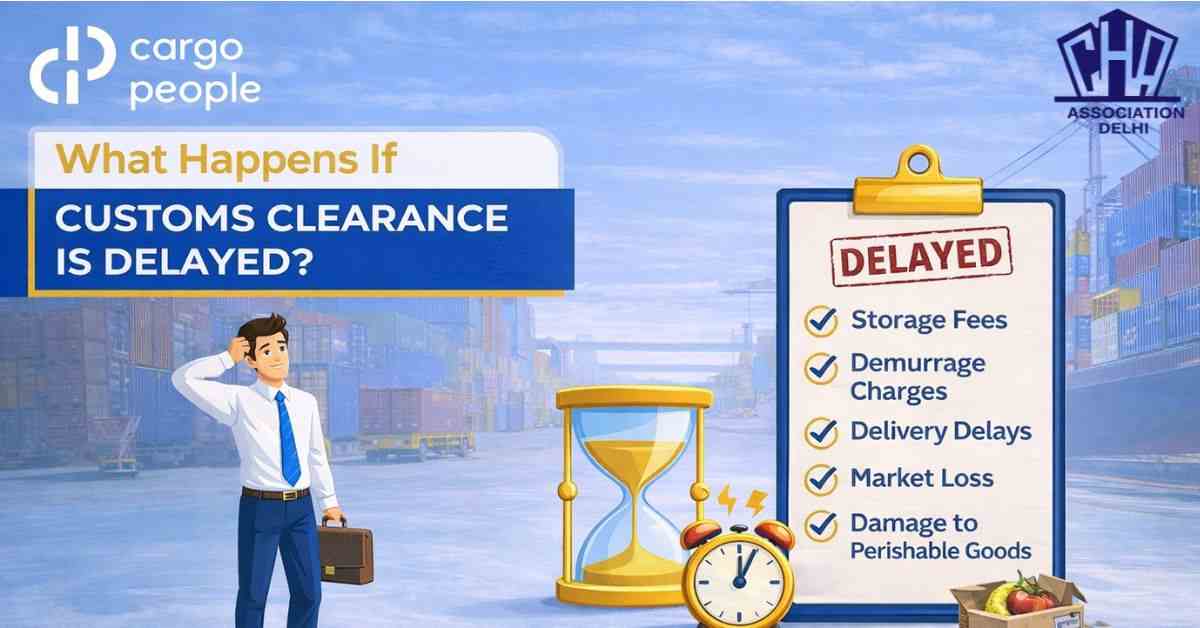
A mid-sized engineering exporter from Faridabad was shipping machine parts to the US for a critical project deadline. The cargo reached the port on time, documentation was submitted, and everything looked routine.
Then came a customs query on product valuation. The shipment stayed put for eight days. Storage charges kept rising, the buyer started pushing back, and the exporter had to dip into working capital just to keep operations running.
This is what a customs clearance delay really looks like on the ground — not just paperwork, but pressure on cash flow, timelines, and trust.
What Does a Customs Clearance Delay Really Mean for a Business?
A customs clearance delay happens when cargo is not released within the expected processing window due to queries, inspections, documentation gaps, or compliance checks by customs authorities.
For businesses, this delay is rarely just a “logistics issue.” It directly affects:
-
When you can invoice your customer
-
How long your money remains blocked
-
Whether your buyer sees you as reliable
-
How much extra cost you absorb quietly
Many Indian importers and exporters underestimate this impact until they experience it first-hand.
How Long Does Customs Clearance Usually Take in India?
In most cases, customs clearance in India is efficient when documentation is accurate and compliance requirements are met. However, timelines differ by port, cargo type, and season.
Average Customs Clearance Timelines at Key Indian Gateways
| Port / Mode | Normal Clearance Window | During Congestion or Peak Season |
|---|---|---|
| Mundra Port (Sea) | 2–4 days | 5–7 days |
| Nhava Sheva / JNPT | 3–6 days | 6–10 days |
| Chennai Port | 3–5 days | 6–8 days |
| Delhi Air Cargo | 1–2 days | 2–4 days |
What this means in practice:
Once you cross these timelines, storage, demurrage, or detention charges begin adding up daily. Planning shipments without buffer time or customs preparedness exposes your business to avoidable costs.
The Most Common Reasons Customs Clearance Gets Delayed
Most customs delays are not random. They usually trace back to small but critical gaps that snowball into bigger issues.
Key Reasons for Customs Delays in India
-
Minor mismatches between invoice and packing list
-
Incorrect HS code leading to reassessment
-
Valuation doubts or duty calculation disputes
-
Missing or incorrect DGFT licenses
-
Regulatory checks for food, pharma, electronics, or chemicals
-
Physical examination triggered by risk profiling
What often catches businesses off guard is that even experienced importers face delays when regulations change or suppliers make assumptions.
The Real Cost of Customs Clearance Delays
The biggest mistake businesses make is focusing only on freight cost — while ignoring what happens when cargo doesn’t move.
Direct Financial Impact
-
Demurrage charges at ports for uncleared containers
-
Container detention charges from shipping lines
-
Storage fees at air cargo terminals
-
Additional handling and examination costs
Indirect Business Impact
-
Production downtime due to raw material shortage
-
Delayed deliveries to customers
-
Cash flow stress due to blocked inventory
-
Loss of credibility with overseas buyers
Sea vs Air: How Delay Costs Behave
| Cost Aspect | Sea Freight | Air Freight |
|---|---|---|
| Delay Tolerance | Low | Moderate |
| Cost Accumulation | Slow but heavy | Fast but capped |
| Risk to Production | High | Medium |
| Cash Flow Impact | Severe in long delays | Immediate but limited |
The key insight:
Sea freight delays hurt more when ignored for “just a few days.” Those days add up very quickly.
When Delays Turn into Compliance and Legal Risks
A delay is not always just a delay. In some cases, it becomes a compliance issue with long-term consequences.
A Common Compliance Scenario
An importer declares goods based on supplier-provided values. Customs raises a valuation query, requests additional documents, and places the shipment on hold. While the importer responds, demurrage accumulates, and the shipment remains under scrutiny.
What started as a documentation clarification ends up becoming:
-
A reassessment of duty
-
A notice for explanation
-
A flagged importer profile for future shipments
Why This Matters
-
Repeated delays invite stricter inspections later
-
Errors can lead to penalties or license complications
-
Businesses lose negotiating power with buyers and suppliers
Preventing these situations is far easier than resolving them after cargo is stuck.
How the Right Freight Forwarder Reduces Delay Risk
A professional freight forwarder does much more than move cargo. They anticipate where customs issues may arise and address them before the shipment lands.
How Cargo People Helps Businesses Avoid Delays
-
Reviewing documents before shipment arrival
-
Advising on correct HS classification
-
Flagging compliance risks early
-
Coordinating with customs brokers and port authorities
-
Tracking clearance progress in real time
-
Managing communication during customs queries
For many businesses, this proactive approach is the difference between smooth clearance and expensive disruption.
A Short Business Story — Planning Makes the Difference
An apparel exporter from Tirupur regularly faced export delays due to repeated customs checks. By restructuring documentation, correcting product classification, and planning shipments with better buffer time, clearance timelines reduced significantly. Over one year, this translated into lower port costs and more predictable delivery schedules for European buyers.
Why Customs Clearance Planning Should Never Be an Afterthought
Customs clearance delays are not rare events. They are part of international trade — but their impact depends entirely on preparation.
Key Takeaways for Importers and Exporters
-
Small documentation errors can create large financial losses
-
Delays affect cash flow as much as logistics
-
Compliance planning protects long-term business credibility
-
Experienced freight partners reduce uncertainty and stress
Ready to Avoid Costly Customs Delays?
📞 +91 9717465454
📧 wecare@cargopeople.com